Best Blinds for Kitchen Windows: Easy-Clean, Heat-Resistant Picks
Best Blinds for Kitchen Windows: Easy-Clean, Heat-Resistant Picks
Your kitchen is the heart of your home, and the window treatments you choose for it need to keep up with everything that happens there. From splattering oil and simmering sauces to steam rising from boiling pots and morning sun glaring off countertops, kitchen windows face a uniquely demanding environment. The wrong blinds will collect grease, warp from heat, stain from steam, and become a cleaning nightmare within weeks.
The best blinds for kitchens combine easy cleaning, resistance to heat and moisture, functional light control, and a style that complements the most-used room in your home. In this guide, we rank the five best types of kitchen window treatments, compare their strengths and weaknesses, and help you choose the right option for your specific kitchen layout.
What Makes Kitchen Windows Different
Before diving into our rankings, understanding why kitchens demand specialized window treatments helps you avoid expensive mistakes.
Grease and Cooking Residue
Every time you cook, microscopic grease particles become airborne and settle on nearby surfaces. If your kitchen window is anywhere near your cooktop or range, your window treatments will accumulate a thin, sticky film of cooking grease over time. This film attracts and holds dust, creating a grimy buildup that is much harder to clean than ordinary household dust.
Standard fabric shades and curtains absorb this grease into their fibers, creating permanent stains and odors that no amount of cleaning can fully remove. Hard-surface blinds made from faux wood, aluminum, or vinyl can be wiped clean because the grease sits on the surface rather than absorbing into the material.
Heat Exposure
Kitchen windows near cooktops, ovens, and even toasters are exposed to elevated temperatures throughout the day. While this heat typically is not intense enough to melt or ignite window treatments, it can cause certain materials to warp, discolor, or become brittle over time. Vinyl and PVC products are more susceptible to heat distortion than aluminum or composite materials.
Steam and Moisture
Boiling water, steaming vegetables, running the dishwasher, and washing dishes at the sink all contribute moisture to the kitchen environment. While typically less intense than bathroom humidity, kitchen moisture is often combined with grease, creating a compound residue that is uniquely difficult to clean.
Light Control Needs
Kitchens need flexible light control throughout the day. Morning cooks want bright natural light. Afternoon meal prep may require reducing west-facing glare. Evening entertaining benefits from softer, ambient lighting. The best kitchen blinds offer adjustable light control rather than a simple open-or-closed operation.
Top 5 Best Blinds for Kitchen Windows (Ranked)
We evaluated kitchen window treatments based on cleaning ease, heat and moisture resistance, light control, safety near cooking areas, and overall style. Here are our top five picks, ranked from best to great.
1. Faux Wood Blinds — Best Overall for Kitchens
Faux wood blinds earn the top spot for kitchen windows because they deliver the widest combination of benefits with the fewest drawbacks.
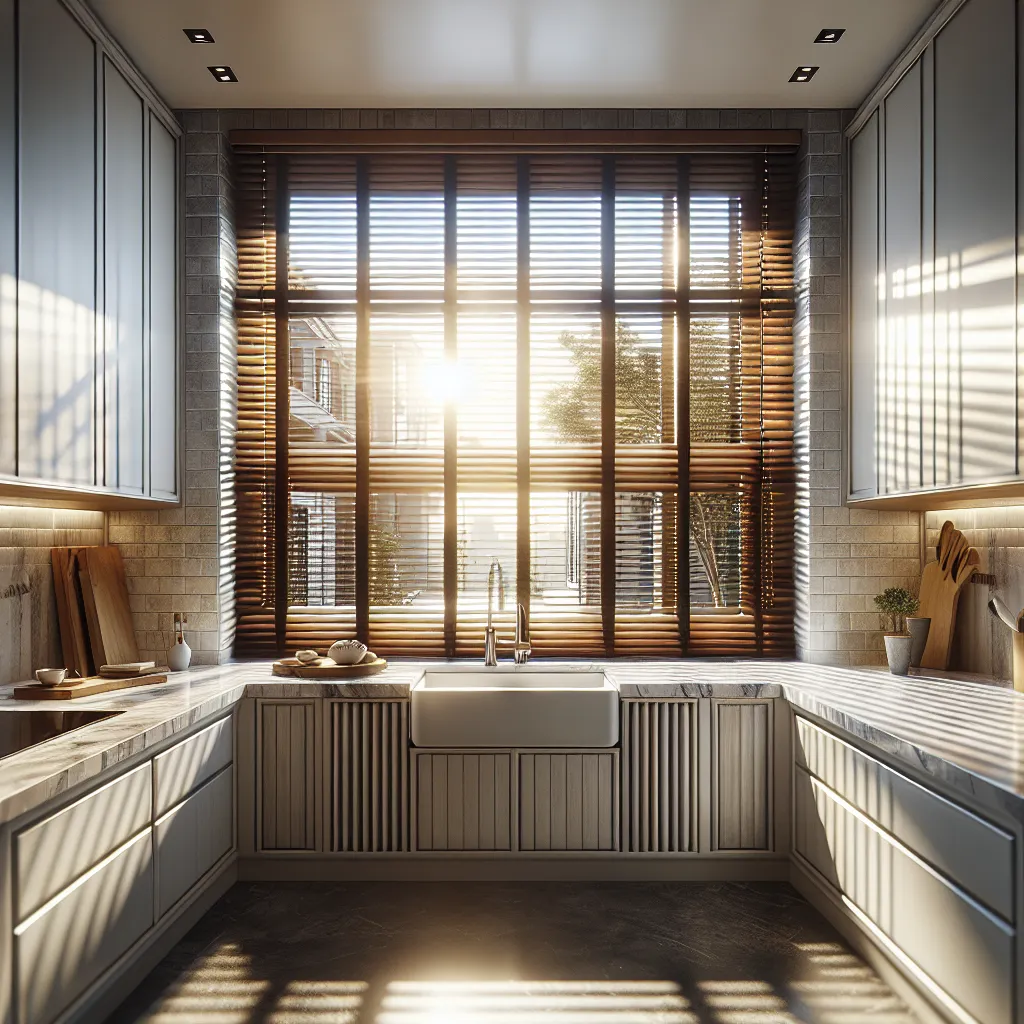
Why they top our list. Faux wood blinds are made from PVC, vinyl, or composite polymers that resist moisture, heat, and grease equally well. Their hard, non-porous slat surface means cooking residue sits on top where you can wipe it away, rather than absorbing into the material. They offer the classic, warm look of real wood without any of wood's vulnerabilities to the kitchen environment.
Cleaning. Wipe each slat with a damp cloth or use a mild kitchen degreaser for heavier buildup. Faux wood slats tolerate most household cleaners without damage. For a deeper clean, you can close the blinds fully, spray with cleaner, and wipe from top to bottom in one pass.
Light control. Adjustable slat tilting gives you precise control over how much light enters your kitchen at any time of day. Tilt them up to bounce light toward the ceiling for ambient illumination, tilt them down to direct light onto countertops, or close them fully for maximum privacy and light blockage.
Heat resistance. High-quality faux wood blinds are engineered to resist warping at normal kitchen temperatures. However, avoid installing them directly above a cooktop where they would be exposed to concentrated rising heat. For windows within a few feet of a heat source but not directly above it, faux wood performs excellently.
Considerations. Faux wood blinds have more individual slats than roller shades, which means more surface area to clean if you let grease buildup accumulate. Consistent weekly wiping prevents this from becoming a chore.
Best for: Kitchen windows above sinks, breakfast nook windows, kitchen windows in open-concept layouts where style matters.
Browse our faux wood blind collection
2. Aluminum Mini Blinds — Best Budget Kitchen Option
Aluminum mini blinds are lightweight, affordable, and inherently resistant to the moisture and grease that define kitchen environments.
Why they rank second. Aluminum does not absorb grease, moisture, or odors. It does not warp from kitchen heat. It cleans with a simple wipe. And it costs significantly less than most other options on this list. For kitchen windows where function matters more than aesthetics, aluminum mini blinds are hard to beat on pure practicality.
Cleaning. Aluminum is one of the easiest blind materials to clean. Wipe with a damp cloth for daily maintenance or use a kitchen degreaser for built-up film. For a thorough cleaning, remove the entire blind and soak it in warm, soapy water in the sink or bathtub, then rinse and hang to dry. This is one of the few blind types that tolerates full immersion.
Light control. Like faux wood, aluminum mini blinds offer adjustable slat tilting for flexible light control throughout the day. The narrower slat width (typically one inch) creates tighter closure and less light leakage between slats compared to wider faux wood options.
Heat resistance. Aluminum handles heat better than any other material on this list. It will not warp, melt, or discolor even in close proximity to a cooktop. This makes aluminum mini blinds one of the few safe options for windows directly behind or very near a cooking surface.
Considerations. Aluminum mini blinds dent easily. The slats are thin and can bend if bumped by kitchen equipment, reaching hands, or energetic cooking. Dented slats do not close properly, creating light gaps and reducing privacy. Aesthetically, aluminum mini blinds have a utilitarian look that may not complement a recently renovated or high-end kitchen design.
Best for: Windows near cooktops, rental kitchens, budget renovations, small kitchen windows.
3. Roller Shades (Vinyl or Solar) — Best for Above-the-Sink Windows
Roller shades, particularly vinyl or solar fabric varieties, offer a clean, modern look with excellent moisture resistance and straightforward cleaning.
Why they rank third. Roller shades have no slats, cords, or ladders where grease and grime can accumulate. Their smooth, continuous surface makes cleaning fast and thorough. Vinyl roller shades are waterproof and grease-resistant. Solar roller shades, made from woven synthetic fabric, filter light while reducing glare and UV exposure on kitchen surfaces and food.
Cleaning. Pull the shade down fully and wipe both sides with a damp cloth or kitchen cleaner. The flat, smooth surface makes this one of the fastest window treatments to clean. Solar shades may require slightly more care because their woven texture can trap fine particles, but a soft brush attachment on a vacuum handles this easily.
Light control. Solar roller shades are particularly well suited for kitchen windows that face the afternoon sun. They reduce glare and UV rays while maintaining your view of the outdoors, which is a significant advantage over blinds that block the view when tilted for glare reduction. Vinyl roller shades are available in light filtering and blackout options.
Considerations. Roller shades offer all-or-nothing light control. The shade is either fully up, fully down, or somewhere in between, but you cannot tilt the angle of light like you can with slatted blinds. For kitchens where you want to fine-tune the light throughout the day, this limitation can be frustrating.
Best for: Above-the-sink windows, west-facing kitchens with glare issues, modern kitchen designs, open shelving layouts.
4. Vertical Blinds — Best for Sliding Kitchen Doors
Vertical blinds are the practical choice for kitchens with sliding glass doors or extra-wide windows, offering easy operation and solid performance in cooking environments.
Why they rank fourth. Many kitchens feature a sliding glass door leading to a patio, deck, or backyard. Vertical blinds are one of the few window treatment styles designed specifically for these wide, tall openings. The vertical slat orientation sheds dust and grease downward rather than collecting it in horizontal channels, which is a meaningful advantage in a kitchen.
Cleaning. Wipe each vertical slat with a damp cloth, working from top to bottom. Because the slats hang vertically, gravity works in your favor. Dust and grease tend to slide down rather than accumulating, and the slats can be individually removed for deeper cleaning if needed.
Light control. Vertical blinds tilt to control light angle and draw to one side or split to both sides for full access to the door. This dual operation, tilt plus traverse, provides more flexibility than most other treatments for large openings.
Considerations. Vertical blinds have a distinct look that not everyone appreciates. Modern versions with wider slats and fabric textures have improved significantly over the vinyl verticals of the 1990s, but they still read as a specific style choice. Also, the bottom weights and chains on vertical blind slats can swing and clatter in a breeze from an open door.
Best for: Sliding kitchen doors, extra-wide kitchen windows, eat-in kitchens with patio access.
View our vertical blind options
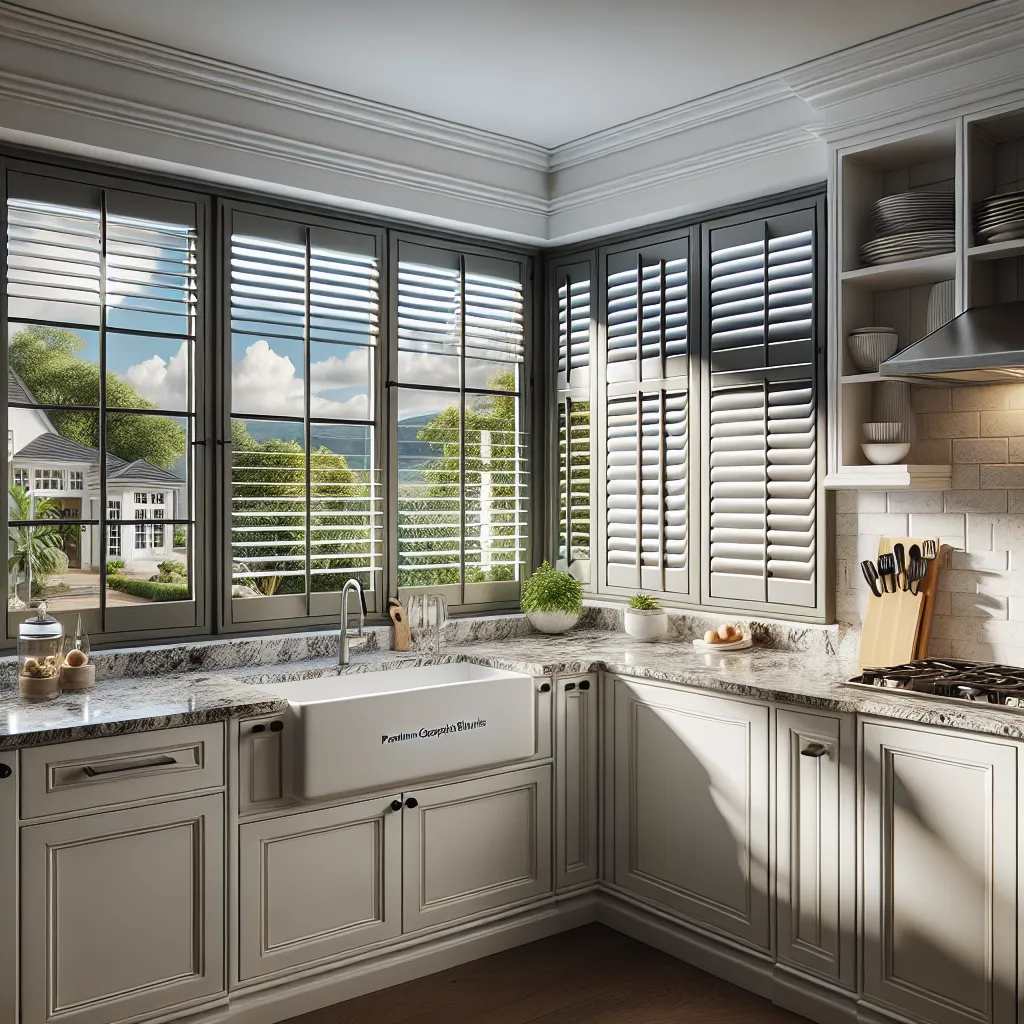
5. Faux Wood Shutters — Best Premium Kitchen Option
Faux wood or composite shutters deliver the most refined, built-in look for kitchen windows with complete resistance to moisture, heat, and grease.
Why they rank fifth. Plantation shutters transform kitchen windows from functional openings into architectural features. Composite and faux wood shutters resist everything a kitchen throws at them, including moisture, heat, grease, and UV exposure, while adding real estate value and timeless style to the room.
Cleaning. Wipe the louvers and frame with a damp cloth or kitchen degreaser. The smooth, painted surfaces clean quickly and do not absorb stains or odors.
Light control. Wide louvers tilt to provide the most precise light control of any option on this list. You can direct light exactly where you need it on your countertops, reduce glare on screens, or close fully for complete privacy.
Considerations. Shutters are the most expensive option here, typically costing two to four times as much as faux wood blinds. They also require professional measurement and installation for a proper fit. For kitchen windows that need to open frequently, the shutter panels can be cumbersome compared to blinds or shades that tuck neatly out of the way.
Best for: High-end kitchen renovations, farmhouse and traditional kitchen designs, windows where shutters can remain partially open most of the time.
Kitchen Blinds Comparison Table
| Feature | Faux Wood Blinds | Aluminum Mini Blinds | Roller Shades | Vertical Blinds | Faux Wood Shutters |
|---|---|---|---|---|---|
| Grease Resistance | Excellent | Excellent | Very Good | Good | Excellent |
| Heat Resistance | Very Good | Excellent | Good | Good | Very Good |
| Cleaning Ease | Easy | Very Easy | Very Easy | Easy | Easy |
| Light Control | Adjustable tilt | Adjustable tilt | All or nothing | Tilt + traverse | Adjustable tilt |
| Durability | 8-12 years | 5-10 years | 5-8 years | 5-8 years | 15-20+ years |
| Price Range | $$ | $ | $-$$ | $-$$ | $$$-$$$$ |
| Best For | Most kitchens | Budget/near heat | Sinks/modern style | Sliding doors | Premium renovations |
Kitchen Window Placement: How Location Changes Your Choice
The right blind depends heavily on where your kitchen window sits relative to cooking and water sources.
Windows Directly Above the Sink
Above-the-sink windows get splashed with water and soap daily. They also tend to be the window you look through most often while working in the kitchen, making view-through capability desirable. Best choices: Roller shades (especially solar) let you see out while reducing glare. Faux wood blinds work well if tilted open. Avoid treatments with fabric components that absorb water splashes.
Windows Behind or Near the Cooktop
These windows face the most intense heat and grease exposure. Best choices: Aluminum mini blinds handle heat best. Faux wood blinds work if the window is not directly above the burners. Avoid any window treatment directly above an open flame or burner; use a fixed glass treatment instead.
Breakfast Nook and Dining Area Windows
These windows are farther from cooking hazards but still within the kitchen's grease and odor zone. Style can take higher priority here. Best choices: Faux wood blinds or shutters deliver the best visual impact. Roller shades work for a modern, minimalist look.
Sliding Kitchen Doors
Best choice: Vertical blinds or vertical cellular shades are designed specifically for these wide openings. Panel track blinds are a modern alternative that provides a cleaner visual profile.
Cleaning Tips for Kitchen Blinds
Even with grease-resistant materials, regular cleaning keeps your kitchen blinds looking fresh and prevents buildup from becoming permanent.
Weekly Maintenance
Dust or wipe your kitchen blinds once a week, ideally on the same day you clean your kitchen surfaces. A dry microfiber cloth removes fresh dust before it binds with grease to form sticky residue.
Monthly Deep Clean
Once a month, wipe each slat or the full shade surface with a damp cloth and a small amount of dish soap or kitchen degreaser. Work from top to bottom to prevent drips from re-soiling cleaned areas. Rinse your cloth frequently to avoid spreading grease from one slat to the next.
Quarterly Detail Cleaning
Every three months, clean the headrail, mounting brackets, pull cords, and bottom rail. These components accumulate grease and dust just like the slats, but they are easy to overlook. A cotton swab dipped in degreaser works well for small crevices and cord holes.
Range Hood Use
Running your range hood while cooking captures a significant percentage of airborne grease before it reaches your window treatments. This single habit can cut the frequency of deep cleaning in half.
Safety Considerations for Kitchen Blinds
Kitchen safety extends to your window treatments in ways you might not expect.
Cord Safety Near Cooking Areas
Dangling blind cords near a cooktop or oven create both a fire hazard and a tangle risk. Cordless or motorized blinds eliminate this concern entirely. If your kitchen blinds have cords, make sure the cords are secured away from any heat sources with cord cleats mounted out of reach.
Fire Resistance
No residential window treatment is truly fireproof, but some materials are more fire-resistant than others. Aluminum is the most fire-resistant option. Faux wood and vinyl will melt rather than catch fire, which is better than fabric that can ignite. Regardless of material, maintain at least 12 inches of clearance between any window treatment and the cooktop or range.
Child Safety
If your kitchen is also a play area (and most are), cordless blinds are the safest choice. The CPSC recommends cordless window treatments in all homes with young children. Many modern faux wood and roller shade options are available in fully cordless designs.
Measuring Kitchen Windows
Kitchen windows sometimes present unique measuring challenges.
Above the Sink
Measure carefully around faucets, soap dispensers, and any fixtures that protrude above the windowsill. These can interfere with inside-mount blinds that sit within the window frame. An outside mount that clears the fixtures may be necessary.
Behind the Cooktop
Ensure your measurements account for any backsplash that extends up to or around the window frame. The backsplash thickness may reduce the available depth for an inside mount.
Odd Shapes and Sizes
Kitchens in older homes frequently have non-standard window sizes, including narrow windows above cabinets, transom windows above doors, and corner windows. Custom-sized blinds from a quality manufacturer ensure a perfect fit regardless of your window dimensions.
Final Verdict: Which Kitchen Blinds Should You Choose?
For most kitchens, faux wood blinds provide the ideal balance of easy cleaning, moisture and grease resistance, attractive appearance, and flexible light control. They work in virtually any kitchen style, from modern to farmhouse to traditional, and their adjustable slats let you adapt the light throughout the day.
If your kitchen window is directly near a cooktop and heat resistance is your top priority, aluminum mini blinds are the most practical and affordable choice. For a sleek, modern kitchen with above-the-sink windows, roller shades offer the cleanest look with the easiest maintenance.
The key principle for any kitchen window treatment is this: choose non-porous, wipeable surfaces over anything that absorbs. Your future self, scrubbing grease off blinds at the end of a long cooking day, will thank you.
Need help choosing the right blinds for your kitchen? Browse our kitchen-friendly collections or preview fabrics online to test materials against your kitchen decor. Not sure what fits your window? Reach out to our team for expert guidance.