Window Treatments for French Doors: Functional and Stylish Options
Window Treatments for French Doors: Functional and Stylish Options
French doors bring elegance, natural light, and a seamless connection between indoor and outdoor spaces. But they also present one of the trickiest window treatment challenges in any home. The combination of glass panels, door handles, moving hinges, and shallow mounting depth makes standard blinds and shades impractical without careful planning.
Whether your French doors lead to a patio, a garden, or connect two interior rooms, this guide covers every viable treatment option, the practical considerations that determine which one works for your specific doors, and installation techniques that keep your treatments looking polished and operating smoothly.
The French Door Challenge
Before exploring solutions, it is important to understand exactly why French doors are difficult to dress. These challenges will directly influence which treatment type is right for your situation.
Shallow Mounting Depth
French door frames are typically much shallower than standard window frames, often providing only 1/2 to 1 inch of depth for a treatment. This eliminates many inside-mount options that require 1.5 to 3.5 inches of depth.
Door Handle Interference
The handle, lockset, and deadbolt hardware on a French door protrudes from the door surface. Any treatment must either clear this hardware when the door is operated or be positioned to avoid it entirely.
Swing Clearance
French doors swing open, either inward or outward. Treatments that extend beyond the door surface can catch on the door frame, adjacent doors, or walls when the door swings. The treatment must stay within the profile of the door in its full range of motion.
Movement and Vibration
Unlike windows, French doors move. Every opening and closing creates vibration and air movement that can cause loosely fitted treatments to sway, rattle, or shift. Treatments need to be secured to the door itself or fitted tightly enough to stay in position during normal use.
Paired Appearance
Most French door installations consist of two doors that meet in the center. Treatments must match precisely across both doors and maintain a symmetrical appearance when viewed together.
Best Window Treatments for French Doors
1. Cellular Shades (Top Pick for Most Situations)
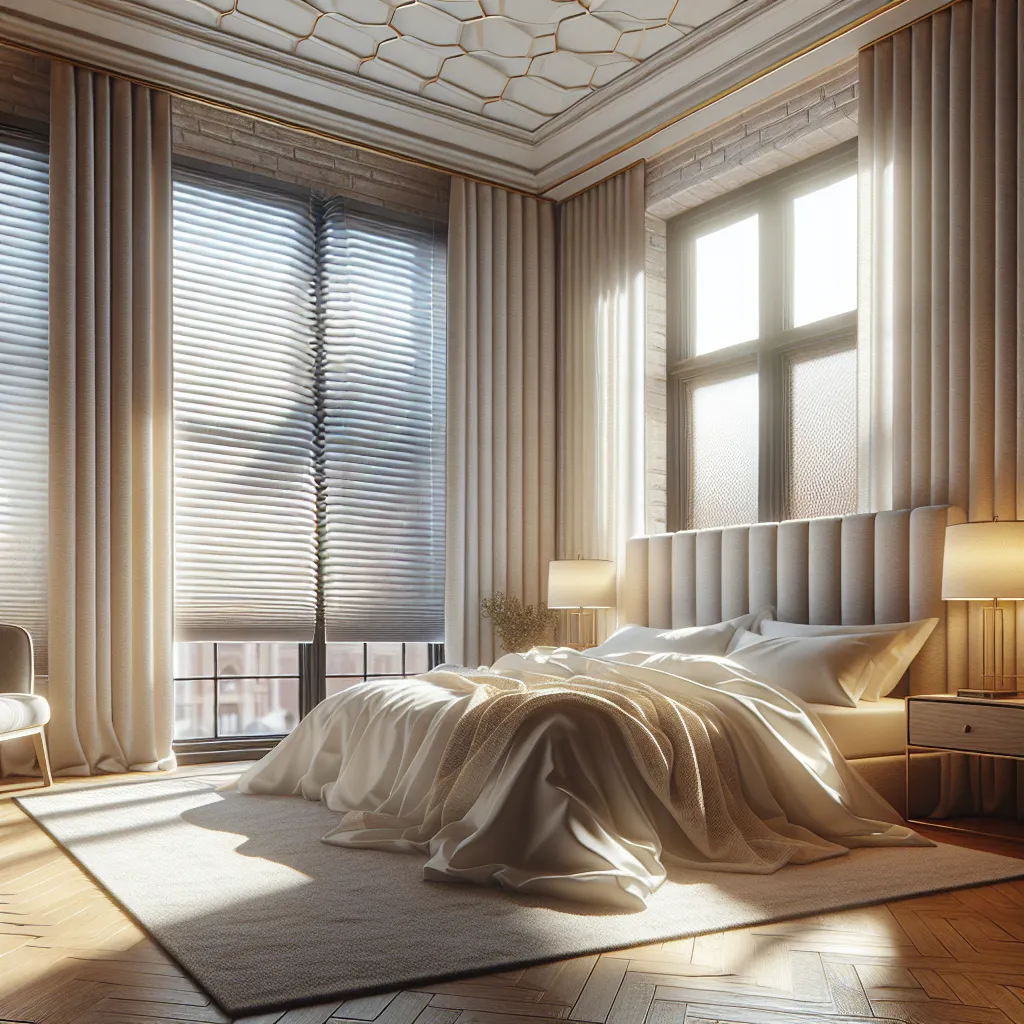
Cellular shades rank as the most versatile and practical treatment for French doors. Their compact headrail, lightweight construction, and cordless operation make them well-suited to the unique constraints of door-mounted installation.
Why they work on French doors:
- The headrail is slim enough to fit within the shallow depth of most French door frames
- Cordless operation means no dangling cords to catch on handles or get pinched in the door
- The lightweight honeycomb fabric stays put during door movement without excessive swaying
- Top-down/bottom-up capability allows you to lower the top for light while maintaining privacy at eye level
- Excellent insulation for the large glass surface of French doors
Installation approach:
Mount the cellular shade directly to the door panel using the door's narrow frame as the mounting surface. Use hold-down brackets at the bottom of the shade to secure it to the door and prevent the shade from swinging away from the glass when the door opens or closes.
Best for: Homeowners who want a clean, functional treatment that provides privacy, light control, and insulation without interfering with door operation.
Browse our cellular shades for French door-compatible options.
2. Door-Mounted Roller Shades
Roller shades offer the slimmest profile of any treatment, making them an excellent choice when mounting depth is extremely limited. A modern roller shade with a cassette valance can look sleek and intentional on a French door rather than like an afterthought.
Why they work on French doors:
- Ultra-slim profile, often under 1 inch of projection from the door surface
- Clean, modern appearance that suits contemporary and transitional interiors
- Available in a wide range of opacities from sheer sunscreen to full blackout
- Motorized options eliminate all cords and chains
Installation approach:
Mount the roller shade brackets directly to the door's face or edge frame. A cassette-style valance is recommended because it conceals the fabric roll and prevents the shade from unrolling during door movement. Use a bottom rail with magnetic hold-downs or tension clips to keep the shade taut against the glass.
Considerations:
- Without bottom hold-downs, the shade will swing freely when the door moves
- Chain-operated roller shades are not recommended for French doors because the chain can catch on handles; choose cordless spring-loaded or motorized operation instead
- Verify that the cassette or brackets do not interfere with the door handle when the shade is fully raised
See our roller shades for slim, door-friendly options.
3. Magnetic Blinds
Magnetic blinds are specifically designed for steel and metal French doors. They attach to the door surface using built-in magnets, requiring no drilling, no screws, and no permanent modifications to the door.
Why they work on French doors:
- Zero installation impact; simply snap them onto the door
- Easy to remove for cleaning, seasonal changes, or when moving
- No holes in the door that could void a warranty or damage the finish
- Available in both horizontal slat and pleated shade styles
Installation approach:
Simply align the magnetic strips on the blind frame with the metal frame of the door and press into place. The magnets hold the blind securely during normal use. Stronger magnet systems include both top and bottom attachment for added stability.
Considerations:
- Only works on steel or metal doors, not wood or fiberglass
- The magnet strength determines how well the blind stays in place during vigorous door use
- Selection is more limited in colors, materials, and sizes compared to screw-mounted options
- Appearance is generally more utilitarian than other options
Best for: Renters, homeowners who cannot or do not want to drill into their doors, and anyone with metal-framed French doors looking for a quick, reversible solution.
4. French Door Shutters
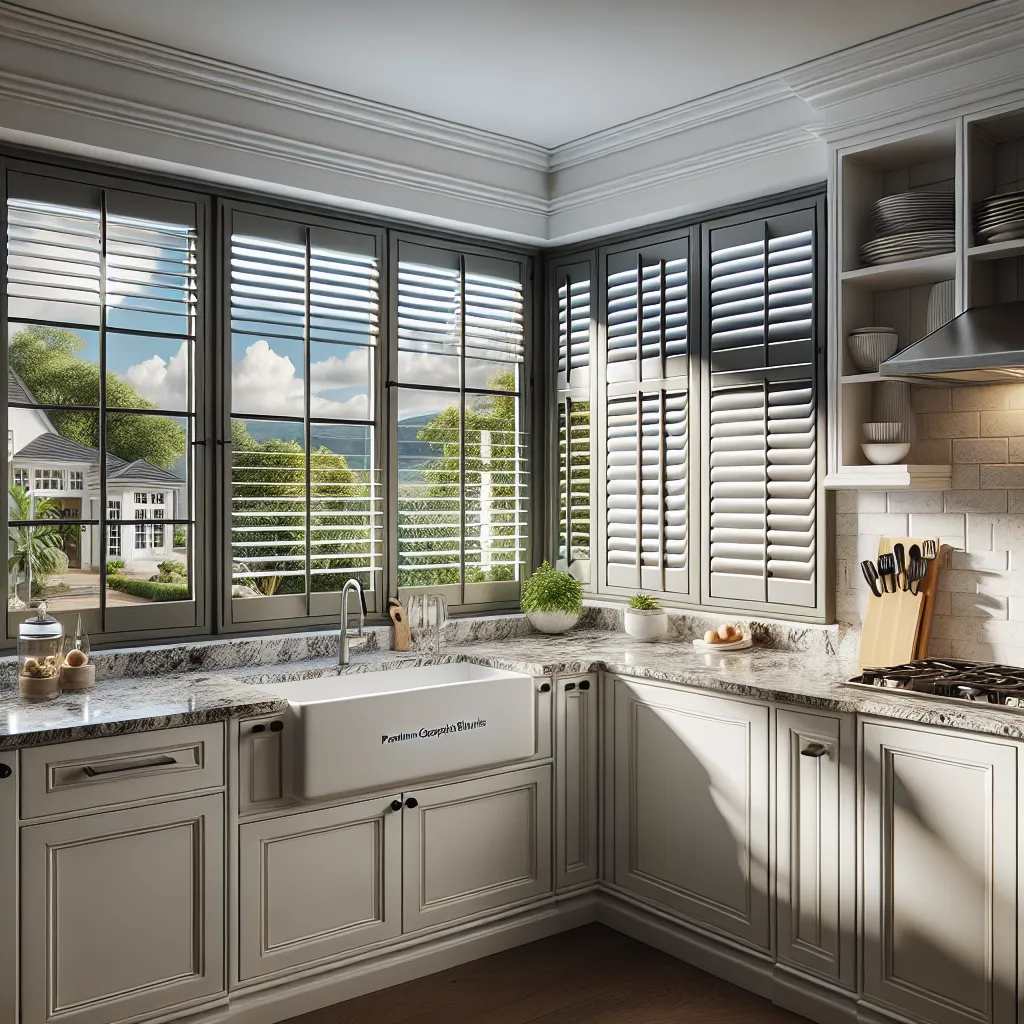
Interior shutters custom-built for French doors deliver the most polished, architectural appearance of any option. They mount directly to the door and become a permanent design element that looks like it was part of the original door design.
Why they work on French doors:
- Custom-fitted to the exact door dimensions for a seamless look
- Adjustable louvers provide precise light and privacy control
- Extremely durable with no fabric to fade, fray, or replace
- Add perceived value to the home
Installation approach:
Shutters for French doors are typically built as a narrow frame with louvers that matches the glass area of the door. They mount to the door face using a Z-frame or direct-mount hinge system. A cutout can be built into the shutter frame to accommodate the door handle, or the shutter can be designed in two tiers with the handle falling between sections.
Considerations:
- The most expensive option by a significant margin
- Adds weight to the door, which may require hinge adjustment
- Professional measurement and installation are strongly recommended
- The shutter depth must not prevent the door from closing properly against the frame or the opposing door
Explore our plantation shutters for French door options.
5. Roman Shades
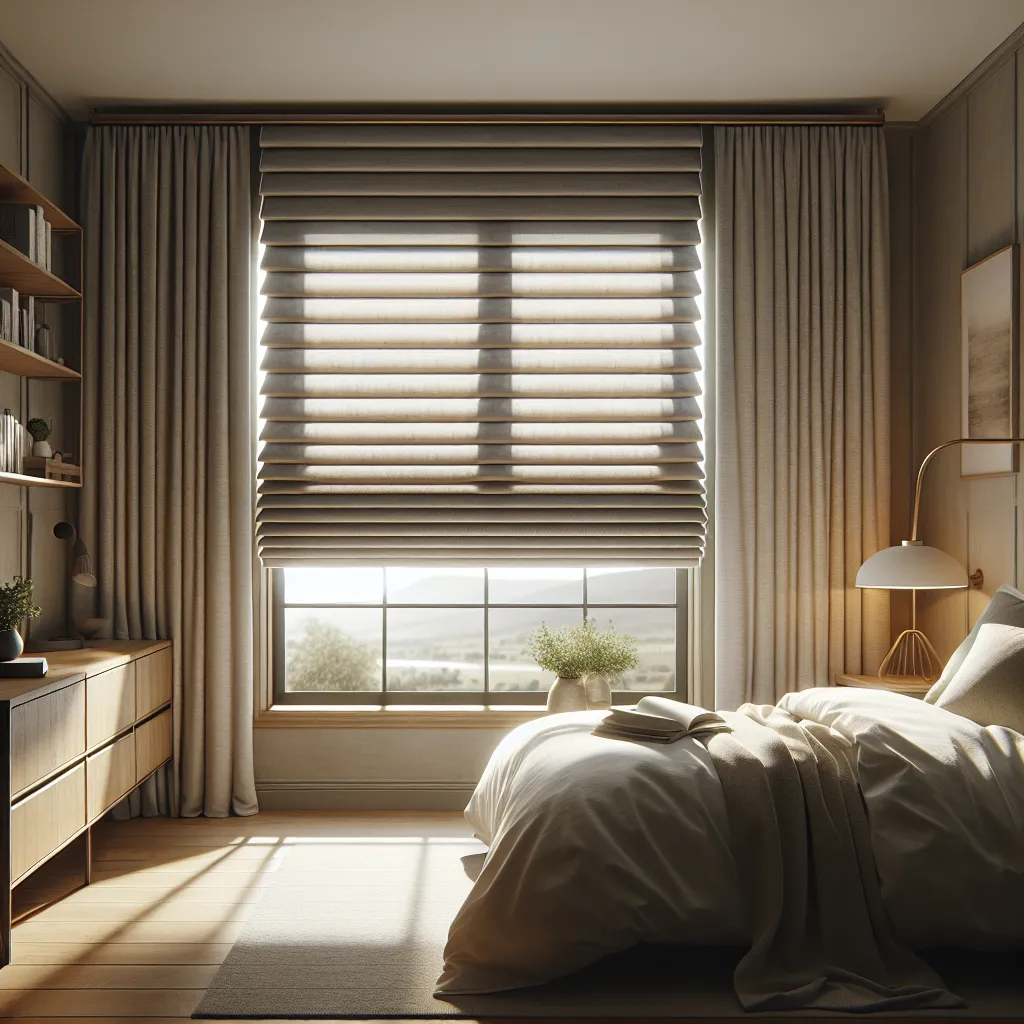
Roman shades add softness and visual warmth to French doors that hard treatments like shutters and blinds cannot replicate. They work best on French doors that are primarily decorative or infrequently operated, such as doors between a master bedroom and a private balcony.
Why they work on French doors:
- Beautiful fabric face adds color, texture, and pattern to an otherwise plain glass door
- Available in light-filtering and blackout options
- Flat-fold styles maintain a slim profile against the glass
Installation approach:
Mount the headrail to the top of the door frame or door face. Attach hold-down brackets or Velcro strips at the bottom to prevent the shade from swinging when the door moves. Choose a cordless or motorized lift to avoid dangling cords.
Considerations:
- The fabric folds at the top when raised consume more space than cellular or roller shades
- Heavier fabrics may swing more during door movement
- Not ideal for high-traffic doors that are opened and closed frequently throughout the day
Check out our Roman shades for French door fabrics.
Handle and Hardware Clearance
One of the most common mistakes when ordering French door treatments is failing to account for door hardware. Here is how to handle it.
Measuring Around Hardware
Step 1: Measure the total glass area of the door, which is the area you want the treatment to cover.
Step 2: Measure the position and dimensions of the handle, lockset, and deadbolt. Note their distance from the edge of the glass area and how far they protrude from the door surface.
Step 3: Determine whether the treatment will cover the hardware area or stop short of it.
Three Approaches to Handle Clearance
Option A: Mount the treatment above the handle zone. Position the treatment to cover only the upper portion of the glass, stopping above the handle. This leaves the handle area uncovered and exposed, which works well when paired with a frosted or textured glass lower panel.
Option B: Use a cutout or notch. Some shutter and blind manufacturers offer custom cutouts in the treatment frame to accommodate the handle. The treatment covers the full glass area but wraps around the hardware. This requires precise measurements and is typically only available for shutters.
Option C: Mount over the handle with clearance. Use spacer blocks or extended brackets to mount the treatment far enough from the door surface that it clears the handle hardware. This increases the treatment's projection from the door but allows full glass coverage. This works best with cellular shades and roller shades on hold-down tracks.
Swing Clearance: Inswing vs. Outswing Doors
Inswing French Doors
Doors that swing inward are the more common configuration. The treatment must not extend beyond the door profile on the interior side, or it will catch on the door frame, walls, or furniture when the door opens.
Guidelines:
- Use flush-mounted or recessed treatments that sit within or flat against the door surface
- Avoid treatments with protruding headrails or bottom rails that could catch
- Test the door's full swing arc before finalizing bracket positions
- Consider the clearance when both doors are open simultaneously if they are double French doors
Outswing French Doors
Outswing doors present fewer interior clearance issues because the door swings away from the room. However, the treatment still must not interfere with the door's exterior swing path, and it must be secured well enough that it does not swing forward and get pinched when the door closes.
Guidelines:
- You have more flexibility with treatment projection on outswing doors
- Focus on securing the bottom of the treatment to prevent it from getting caught in the door as it closes
- Weather considerations apply if the exterior side is exposed to elements
Privacy vs. Light: Finding the Right Balance
French doors typically feature large glass panels that are wonderful for light but challenging for privacy. Here is how to balance the two.
Daytime Privacy Solutions
- Top-down/bottom-up cellular shades: Lower from the top for light, raise from the bottom for privacy where it matters most at eye level
- Solar screen roller shades: Block the view from outside while maintaining a clear outward view from inside during daylight hours
- Frosted or decorative window film combined with a partial shade: Apply film to the lower portion of the glass for permanent privacy and add a shade to the upper portion for adjustable light control
Nighttime Privacy Solutions
For nighttime privacy when interior lights make the glass transparent from outside, you need a treatment with sufficient opacity.
- Light-filtering treatments provide moderate privacy but silhouettes may be visible
- Room-darkening treatments (opacity 75-95%) block most visibility
- Blackout treatments provide complete privacy with no visibility from outside
Our Recommended Combinations
| Privacy Need | Best Treatment | Notes |
|---|---|---|
| Daytime only | Solar screen roller shade | Maintains view out, blocks view in |
| Day and night moderate | Light-filtering cellular shade | Good balance, some night silhouettes |
| Maximum privacy | Blackout cellular or roller shade | Complete privacy, blocks all light |
| Variable privacy | Top-down/bottom-up cellular | Adjustable zone control |
| Privacy with style | Plantation shutters | Adjustable louvers, permanent solution |
DIY Installation Guide
Most French door treatments can be installed without professional help. Here is a step-by-step guide that applies to cellular shades and roller shades, the two most commonly DIY-installed options.
What You Need
- Pencil
- Level
- Tape measure
- Drill with appropriate drill bits
- Screwdriver
- Provided brackets and hardware
- Hold-down brackets (if not included)
Installation Steps
Step 1: Position the brackets. Hold the headrail up to the door in the desired position. Use a level to ensure it is straight. Mark the screw hole positions with a pencil.
Step 2: Pre-drill pilot holes. Use a drill bit slightly smaller than the provided screws. French doors are typically hollow-core, so be careful not to drill through to the other side. If the door is hollow-core, use the toggle bolts or hollow-door anchors included with door-mount hardware kits.
Step 3: Attach the brackets. Screw the mounting brackets into the pilot holes. Tighten firmly but do not overtighten, as this can strip the holes in hollow-core doors.
Step 4: Snap in the headrail. Click the shade's headrail into the mounted brackets. Verify that it is secure and level.
Step 5: Install hold-down brackets. Mount the bottom hold-down brackets or clips to the lower edge of the door frame. These keep the shade snug against the glass during door movement.
Step 6: Test the operation. Raise and lower the shade several times to verify smooth operation. Open and close the door to confirm that the treatment does not interfere with door movement, handle operation, or the locking mechanism.
Step 7: Install the second door. Repeat the process on the second door, taking extra care to match the mounting height and position exactly. Stand back and view both doors together to confirm symmetry before tightening everything down.
Troubleshooting Common Installation Issues
| Issue | Cause | Fix |
|---|---|---|
| Shade swings when door opens | Missing hold-down brackets | Install bottom hold-down clips or magnetic strips |
| Brackets pull out of door | Hollow-core door, wrong fasteners | Use toggle bolts or hollow-door anchors |
| Shade catches on handle | Insufficient clearance | Add spacer blocks behind brackets to increase projection |
| Shades do not match between doors | Inconsistent mounting height | Remeasure and remount using a laser level across both doors |
| Door will not close fully | Treatment protrudes beyond door edge | Reposition treatment within the door's profile |
Top 5 French Door Treatment Picks
Here are our top five recommendations ranked by overall suitability for French doors.
Cordless cellular shades with hold-downs. Best overall combination of function, appearance, and value. The cordless operation, slim profile, and insulating properties make them the default recommendation for most French door situations. Shop cellular shades.
Motorized roller shades with cassette. Best modern option. The motorized lift eliminates all cords, the cassette conceals the roll, and the slim profile works with even the shallowest door frames. Shop roller shades.
Custom plantation shutters. Best premium option. Nothing looks more polished or adds more value than custom shutters built to fit your specific French doors. Shop plantation shutters.
Magnetic pleated shades. Best no-drill option. Ideal for renters or anyone who cannot modify their doors. Limited style selection but genuinely effective for metal-framed doors.
Flat-fold Roman shades with hold-downs. Best decorative option. When style and fabric impact matter more than daily heavy-use durability, a beautiful Roman shade transforms a plain French door. Shop Roman shades.
Cost Expectations
French door treatments are typically priced per door. Here is what to budget for a pair of standard French doors.
| Treatment Type | Per Door | Per Pair |
|---|---|---|
| Cordless cellular shade | $60-$150 | $120-$300 |
| Roller shade (motorized) | $120-$280 | $240-$560 |
| Magnetic blinds | $30-$80 | $60-$160 |
| Plantation shutters | $200-$450 | $400-$900 |
| Roman shades | $100-$250 | $200-$500 |
| Hold-down brackets (add-on) | $10-$25 | $20-$50 |
Professional installation for French door treatments typically runs $40 to $80 per door, though many homeowners handle this as a DIY project successfully.
Making Your Decision
The right French door treatment depends on your priorities. Use this decision framework:
- Function first, budget-friendly: Cordless cellular shades
- Modern aesthetic, minimal maintenance: Motorized roller shades
- Maximum style impact, long-term investment: Plantation shutters
- No modifications to the door: Magnetic blinds
- Warmth and pattern: Roman shades
Whichever direction you choose, the keys to success are accurate measurements that account for hardware and swing clearance, secure hold-down brackets that keep the treatment stable during door use, and precise matching between paired doors.
Ready to dress your French doors? Browse our complete window treatment collection or contact our team for help selecting the right solution for your specific doors. We can walk you through measurement, hardware clearance, and installation to make sure you get a result that looks and works exactly as it should. Request online fabric previews to compare fabrics and materials before ordering.