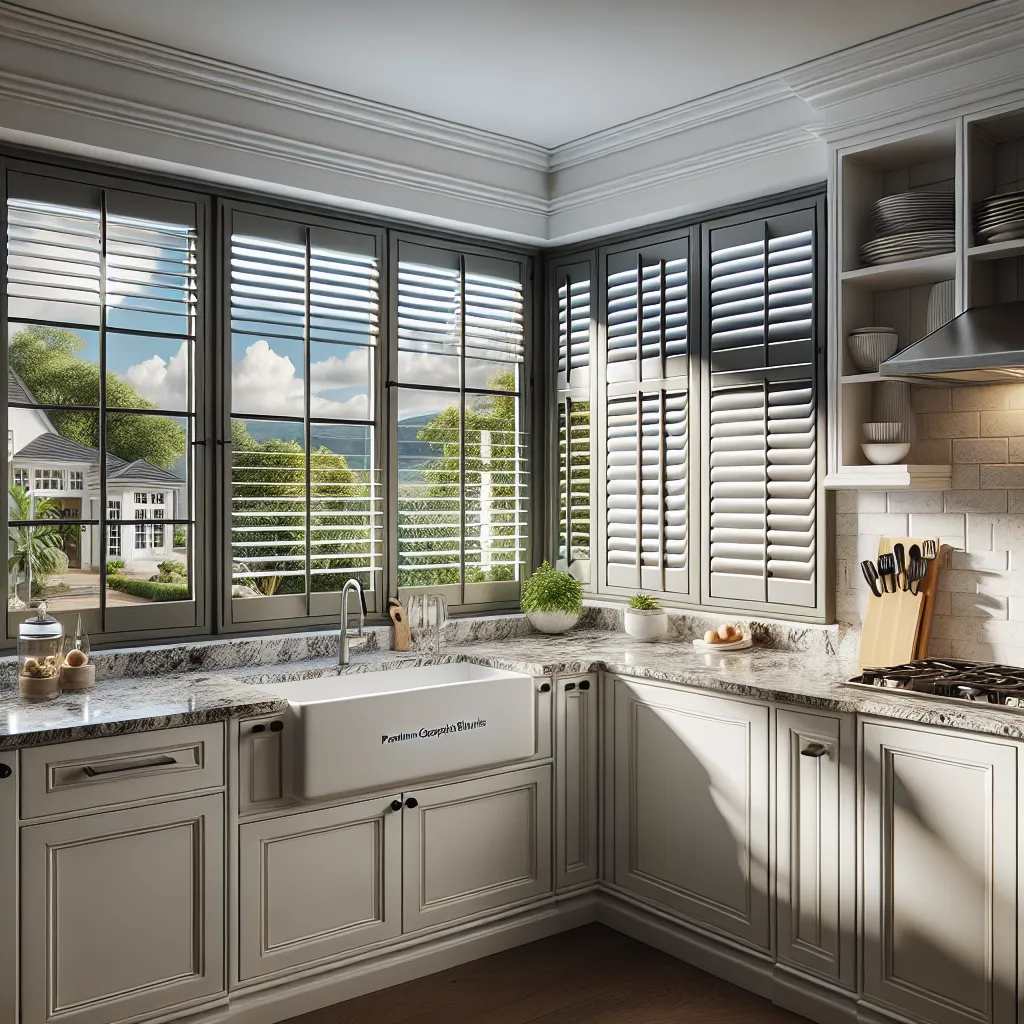

Blinds vs Curtains: Pros, Cons, and When to Use Each
Blinds vs Curtains: Pros, Cons, and When to Use Each
The blinds vs curtains debate is one of the oldest in home design. Both cover your windows. Both control light and privacy. But they do it in fundamentally different ways, and choosing the wrong one can leave you with a room that looks off, feels uncomfortable, or costs more to maintain than it should.
This guide goes beyond surface-level comparisons. We break down every factor that should influence your decision -- from practical concerns like cost and cleaning to subjective ones like style and mood -- and give you room-by-room recommendations so you can stop guessing and start choosing with confidence.
Understanding the Basic Difference
Blinds use rigid horizontal or vertical slats made from wood, faux wood, aluminum, or vinyl. You tilt the slats to control light and raise the entire assembly to expose the window. Blinds are structured, precise, and mechanical.
Curtains (and drapes) are panels of fabric that hang from a rod above the window. You pull them open or closed, and the fabric itself determines how much light passes through. Curtains are soft, flowing, and textile-based.
This structural difference drives every other comparison. Blinds give you granular control but a harder aesthetic. Curtains give you softness and drama but less precision.
Blinds vs Curtains: Head-to-Head Comparison Table
| Feature | Blinds | Curtains |
|---|---|---|
| Average Cost | $30 - $250 per window | $50 - $300+ per panel (2 panels per window) |
| Light Control | Excellent (adjustable slats) | Moderate (open/closed only) |
| Privacy | Excellent | Good to Excellent (depends on fabric weight) |
| Insulation | Low to Moderate | Moderate to High (thermal/blackout curtains) |
| Noise Reduction | Minimal | Moderate to Good (heavy fabrics) |
| Maintenance | Moderate (regular dusting) | Low to Moderate (occasional washing) |
| Moisture Resistance | High (faux wood, aluminum) | Low (fabric absorbs moisture) |
| Lifespan | 5 - 10 years | 5 - 15 years (quality dependent) |
| Child/Pet Safety | Moderate (cordless options available) | Moderate (can pull down rods) |
| Style Range | Clean, structured | Dramatic, soft, textured |
| Space Requirement | Minimal (fits within window frame) | Moderate (extends beyond frame) |
| UV Protection | Good (blocks direct sun) | Excellent (lined curtains) |
| Installation | Easy (brackets + screws) | Easy (rod + brackets) |
| Best For | Small rooms, modern spaces, kitchens, bathrooms | Large rooms, bedrooms, formal spaces |
Cost: The Full Financial Picture
Blinds Cost Breakdown
The cost of blinds depends primarily on material:
- Aluminum/vinyl: $30 - $80 per window
- Faux wood blinds: $60 - $150 per window
- Real wood blinds: $120 - $250 per window
- Motorized blinds: Add $100 - $200 per window
For a typical home with 10 to 15 windows, basic faux wood blinds will run $600 to $2,250 total. This includes mounting hardware, which is usually included with the blinds.
Curtains Cost Breakdown
Curtains have a wider price range because fabric quality varies enormously:
- Ready-made budget curtains: $20 - $60 per panel
- Ready-made mid-range: $60 - $150 per panel
- Custom curtains: $150 - $500+ per panel
- Curtain rod and hardware: $20 - $100 per window
Remember that most windows need two panels. A mid-range curtain setup costs $140 to $400 per window -- meaning curtains are often more expensive than blinds for the same window.
Hidden Costs to Consider
Blinds have few hidden costs. The product price usually covers everything you need for installation. Replacement slats are inexpensive if one breaks.
Curtains add up in ways people do not expect. Lining fabric for blackout or thermal performance adds 30% to 50% to the panel cost. Decorative rods with finials can cost more than the curtains themselves. And professional dry cleaning for heavy or delicate fabrics costs $30 to $60 per panel per cleaning.
Maintenance and Cleaning
Cleaning Blinds
Blinds require regular dusting to prevent buildup on slats. A microfiber duster, damp cloth, or vacuum brush attachment handles routine cleaning. For deep cleaning, faux wood blinds can be wiped with a damp cloth and mild soap. Aluminum blinds can even be removed and soaked in a bathtub.
The downside is frequency. Blinds collect visible dust faster than curtains, and dusty blinds look noticeably unkempt. Plan on dusting every 1 to 2 weeks for a consistently clean appearance.
Cleaning Curtains
Curtains need less frequent cleaning -- typically a vacuum with the upholstery attachment every month and a full wash or dry clean once or twice a year. Machine-washable curtain fabrics like cotton and polyester are the easiest to maintain. Silk, linen, and velvet generally require professional cleaning.
The advantage is that curtains hide dust better between cleanings. The disadvantage is that a full cleaning cycle is more involved and expensive than wiping down blinds.
Insulation and Energy Efficiency
Blinds Insulation Performance
Standard blinds provide limited insulation. Even when fully closed, air passes through gaps between slats and around the edges of the blind. Cellular shades are a notable exception -- their honeycomb structure traps air and delivers R-values up to R-5 -- but traditional slatted blinds hover around R-1 to R-2.
If energy efficiency is a primary concern and you prefer hard window treatments, cellular shades bridge the gap between blinds and curtains.
Curtains Insulation Performance
Curtains outperform standard blinds for insulation, especially when you choose the right fabric and installation approach:
- Standard unlined curtains: Minimal insulation
- Lined curtains: Moderate insulation, reduce heat transfer by 25% to 35%
- Thermal or blackout curtains: Significant insulation, reduce heat transfer by 40% to 60%
- Floor-length curtains with thermal lining: Best performance, minimize drafts from the bottom
The key is full coverage. Curtains that extend past the window frame on both sides and reach the floor create a more complete air barrier than blinds. Adding a cornice or valance above the curtain rod further improves performance by sealing the top edge.
Sound Insulation
This is an area where curtains clearly win. Heavy, dense curtain fabrics absorb sound waves and reduce noise transmission through windows. This matters for homes on busy streets, near airports, or in apartment buildings. Blinds do virtually nothing for sound insulation because their hard surfaces reflect rather than absorb sound.
Light Control
Blinds: Precision Control
Blinds excel at light control because you can tilt the slats to any angle. This lets you:
- Redirect sunlight toward the ceiling for ambient glow without glare
- Angle slats downward to block direct sun while maintaining a partial view
- Close slats completely for near-darkness
- Raise the entire blind for full, unobstructed light
This adjustability makes blinds ideal for home offices (where screen glare matters), kitchens (where task lighting changes throughout the day), and any room where you want to fine-tune brightness without committing to full open or full closed.
Curtains: All-or-Nothing Light
Curtains offer less nuance. They are either open, closed, or partially drawn. The fabric determines what happens when they are closed:
- Sheer curtains: Diffuse light beautifully, creating a soft glow, but provide minimal privacy
- Light filtering curtains: Block the view while allowing muted, ambient light
- Blackout curtains: Block 95% to 100% of light for sleep-quality darkness
If you need to quickly darken a room for sleeping or media viewing, blackout curtains are among the most effective solutions available. But if you want to adjust brightness levels throughout the day without opening or closing the curtains entirely, blinds are the better tool.
Style and Aesthetics
When Blinds Look Better
Blinds suit rooms where you want a clean, uncluttered look. Their structured lines work well in:
- Modern and minimalist spaces where visual simplicity matters
- Small rooms where bulky fabric would overwhelm the space
- Kitchens and bathrooms where the practical, clean look of blinds fits naturally
- Homes with beautiful window trim that you want to showcase rather than cover
Wood blinds and faux wood blinds add warmth without softness, making them versatile enough for traditional, transitional, and contemporary rooms.
When Curtains Look Better
Curtains suit rooms where you want warmth, texture, drama, or formality. They excel in:
- Living rooms and dining rooms where floor-to-ceiling curtains create a sense of height and grandeur
- Bedrooms where soft fabric adds coziness and intimacy
- Rooms with high ceilings where curtains mounted near the ceiling draw the eye upward
- Spaces that need pattern or color -- curtain fabrics offer virtually unlimited design options
Curtains also soften hard surfaces. In rooms with lots of wood, tile, or glass, curtain panels add a textile layer that makes the space feel warmer and more inviting.
Modern Trends in 2026
Current design trends favor a few specific approaches:
- Minimalist roller shades paired with simple linen curtains for a layered, modern look
- Natural wood blinds in earthy tones for organic, warm interiors
- Floor-to-ceiling sheer curtains in white or cream for a light, airy Scandinavian feel
- Color-block curtains in muted terracotta, sage, or navy for a refined pop of color
- Motorized blinds with smart home integration for convenience and clean lines
Layering: Using Blinds and Curtains Together
One of the best-kept secrets in window treatment design is that you do not have to choose between blinds and curtains. Layering both gives you the functional benefits of blinds with the aesthetic benefits of curtains.
How to Layer Effectively
- Install blinds inside the window frame using an inside mount for a clean fit
- Hang curtain panels on a rod outside the frame, extending 3 to 6 inches beyond each side of the window
- Choose complementary colors -- the blinds should either match the wall color or the curtain color
- Use blinds for daily light control and curtains for aesthetic framing and additional insulation at night
Layering Combinations That Work
- Faux wood blinds + linen curtains: Classic and versatile
- White roller shades + velvet drapes: Modern elegance
- Cellular shades + sheer curtains: Maximum insulation with a soft touch
- Wood blinds + patterned curtains: Rich, layered traditional look
When Not to Layer
Layering does not work in every situation:
- Small windows look cluttered with two treatments
- Kitchens and bathrooms rarely need the extra fabric layer
- Very modern spaces may look busier than intended
- Budget constraints -- layering doubles your cost per window
Room-by-Room Recommendations
Living Room
Best choice: Curtains (or blinds + curtains layered)
The living room is where aesthetics matter most. Floor-length curtains add height, frame the windows, and contribute texture to the room's design. If you need light control for TV viewing, layer faux wood blinds underneath the curtains.
Bedroom
Best choice: Blackout curtains or Cellular shades
Sleep quality depends on darkness. Blackout curtains are the most effective light blockers for bedrooms and also provide good insulation and sound absorption. If you prefer a cleaner look, blackout cellular shades combine darkness with energy efficiency in a more compact package.
Kitchen
Best choice: Blinds
Kitchens need window treatments that resist moisture, heat, and cooking grease. Faux wood blinds check every box -- they clean easily, handle humidity, and will not absorb cooking odors. Curtains near stovetops are a fire hazard and will absorb food smells.
Bathroom
Best choice: Blinds
Moisture is the enemy of fabric. Bathrooms generate steam, splashing water, and condensation that would damage or mildew curtains quickly. Faux wood or aluminum blinds handle these conditions without issue.
Home Office
Best choice: Blinds
Screen glare is the top concern in a home office. Blinds let you angle slats precisely to redirect sunlight away from your monitor without darkening the room entirely. Roller shades with light-filtering fabric are another excellent option.
Dining Room
Best choice: Curtains
Dining rooms benefit from the formality and warmth that curtains bring. Elegant drapes in rich fabrics elevate the space for entertaining. For daily use, keep the curtains open to maximize natural light during meals.
Children's Rooms
Best choice: Cordless blinds or Cellular shades
Safety is paramount. Cordless faux wood blinds or cordless cellular shades eliminate strangulation hazards. Blackout options help with nap time and early bedtimes. Avoid long curtains that toddlers can pull down.
Pros and Cons Summary
Blinds
Pros:
- Precise, adjustable light control
- Moisture resistant (faux wood, aluminum)
- Compact, space-efficient
- Wide range of price points
- Clean, structured appearance
Cons:
- Collect dust on slats
- Less insulation than heavy curtains
- No sound absorption
- Can look utilitarian without the right material
- Cord safety concerns (choose cordless)
Curtains
Pros:
- Softer, warmer aesthetic
- Superior insulation (thermal/blackout)
- Sound absorption
- Unlimited fabric, color, and pattern options
- Can make rooms feel taller and more spacious
Cons:
- Less precise light control
- Not moisture-friendly
- Higher total cost (panels + rod + cleaning)
- Take up more space around the window
- Require more complex cleaning
Making Your Decision
Here is a simple framework:
- Choose blinds if you prioritize light control, moisture resistance, compact design, or budget.
- Choose curtains if you prioritize aesthetics, insulation, sound absorption, or room-transforming impact.
- Choose both if you want the best of both worlds and have the budget and window size to support layering.
The "right" answer depends entirely on the room, your priorities, and your home's design direction. There is no universally better option -- only the one that better serves your specific needs.
Start Exploring Your Options
Whether you lean toward blinds, curtains, or a combination of both, the best next step is seeing materials in person. Preview fabrics online of our blinds and shades to compare colors, textures, and materials against your room's palette. If you want personalized guidance on what works best for your windows, reach out to our team -- we help homeowners make this decision every day.