Faux Wood Blinds vs Real Wood Blinds: Worth the Price Difference?
Faux Wood Blinds vs Real Wood Blinds: Worth the Price Difference?
Real wood blinds look beautiful. That warm, natural grain texture is something that no synthetic material has fully replicated. But real wood blinds also cost significantly more, weigh more, and come with maintenance requirements that faux wood blinds sidestep entirely.
So the question is straightforward: is the visual and tactile difference of real wood worth paying 50% to 100% more per window? For some homeowners, absolutely. For others, faux wood delivers 90% of the look at a fraction of the cost and hassle.
This guide compares faux wood blinds and real wood blinds across every factor that should influence your decision -- durability, moisture resistance, weight, appearance, cost, maintenance, and room suitability -- so you can make the right call for your budget and your home.
What Are Faux Wood Blinds?
Faux wood blinds are made from synthetic materials designed to look like natural wood. The most common materials are:
- PVC (polyvinyl chloride): The most affordable option. Lightweight, moisture-resistant, but can yellow over time with heavy UV exposure.
- Composite (wood/polymer blend): A mix of real wood particles and synthetic polymers. Heavier and more realistic-looking than pure PVC. Better UV resistance.
- Vinyl-wrapped wood core: A real wood or MDF core wrapped in a vinyl coating. Combines the weight and feel of wood with moisture protection.
Modern faux wood blinds have improved dramatically in recent years. The best composite and vinyl-wrapped options are nearly indistinguishable from real wood at normal viewing distances. Up close, the grain pattern may appear more uniform than natural wood, but the difference is subtle.
What Are Real Wood Blinds?
Real wood blinds are made from natural hardwoods -- most commonly basswood, which is valued for its light weight, straight grain, and ease of staining. Other species used include ash, cherry, oak, and bamboo.
Each slat is cut from actual timber, sanded, stained or painted, and finished with a protective coating. Because they are natural material, no two slats are perfectly identical. The grain patterns, color variations, and texture are genuine, which gives real wood blinds a warmth and authenticity that synthetics approximate but never quite match.
Faux Wood vs Real Wood Blinds: Complete Comparison Table
| Feature | Faux Wood Blinds | Real Wood Blinds |
|---|---|---|
| Average Cost (per window) | $60 - $150 | $120 - $300 |
| Material | PVC, composite, or vinyl-wrapped | Basswood, ash, oak, bamboo |
| Appearance | Very good (simulated wood grain) | Excellent (natural grain, authentic) |
| Weight | Moderate to Heavy (PVC is light, composite is heavier) | Moderate (basswood is light for wood) |
| Moisture Resistance | Excellent | Poor (warps, cracks, swells) |
| UV Resistance | Good (some PVC may yellow) | Moderate (fades, can dry out) |
| Warping Resistance | Excellent | Low to Moderate |
| Durability | 7 - 12 years | 8 - 15 years (with proper care) |
| Maintenance | Low (wipe with damp cloth) | Moderate (dust carefully, condition periodically) |
| Color/Stain Options | Wide range | Wide range + custom stain matching |
| Slat Sizes | 2" and 2.5" standard | 1", 2", 2.5" available |
| Maximum Width | Up to 96" (may need center support) | Up to 72" (heavier, more sag risk) |
| Eco-Friendliness | Low (petroleum-based plastics) | Moderate to High (renewable, biodegradable) |
| Best For | Kitchens, bathrooms, budget-conscious, rentals | Living rooms, offices, high-end homes |
Appearance: Can You Tell the Difference?
This is the question everyone asks, and the honest answer depends on the quality tier you are comparing.
From Across the Room (6+ Feet)
At normal viewing distances, quality faux wood blinds are virtually indistinguishable from real wood. The color, the sheen, and the overall impression are the same. A visitor walking into your living room will not know the difference unless they walk up and inspect the slats closely.
Up Close (Within 2 Feet)
This is where differences emerge:
- Grain pattern: Real wood grain is irregular, varied, and slightly unpredictable. Each slat has its own character. Faux wood grain is embossed in a repeating pattern that is consistent from slat to slat. Looking at multiple slats side by side, the repetition becomes noticeable.
- Texture: Real wood has a subtle, organic texture under your fingertips -- a slight roughness from the natural grain. Faux wood feels smoother and more uniform, with a slightly plastic quality on pure PVC versions. Composite faux wood feels closer to real wood.
- Weight and sound: Real wood slats have a solid, resonant quality when you tap or flex them. Faux wood (especially PVC) feels lighter and produces a more hollow sound. This is a minor detail, but it contributes to the overall perception of quality.
- Color depth: Real wood stains penetrate the wood fibers, creating depth and variation as light hits the grain at different angles. Faux wood finishes sit on the surface, producing a more uniform color that lacks the same depth.
The Verdict on Appearance
If you are an interior design professional, a woodworker, or someone who notices material details, you will see the difference. If you are a typical homeowner who wants attractive, wood-toned blinds, quality faux wood blinds will satisfy you completely.
Durability: Which Lasts Longer?
Faux Wood Durability
Faux wood blinds are remarkably durable in ways that real wood is not:
- They do not warp. Temperature swings and humidity changes that would bend or twist real wood slats have no effect on PVC or composite faux wood.
- They do not crack. Dry conditions that cause real wood to split do not affect synthetic materials.
- They resist impact. A faux wood slat can flex without snapping. Real wood is more brittle and can break if bent beyond a certain point.
- They resist staining. Spills and splashes wipe off faux wood without leaving marks. Real wood can absorb liquids and stain.
The primary durability concern with faux wood is UV yellowing. Some lower-quality PVC blinds can develop a yellowish tint after years of direct sunlight exposure. Higher-quality faux wood blinds include UV stabilizers that prevent this.
Expected lifespan: 7 to 12 years.
Real Wood Durability
Real wood blinds can last longer than faux wood -- up to 15 years or more -- but only with proper care and favorable conditions:
- Low humidity environments: Real wood thrives in climate-controlled interiors with moderate humidity (30% to 50%). Dry air causes cracking. Humid air causes swelling and warping.
- Limited direct sunlight: UV exposure fades wood finishes and can dry out the wood over time. South-facing and west-facing windows are the highest risk.
- Gentle handling: Real wood slats are more fragile than faux wood. Rough handling -- bending slats to peek through, letting children grab them, or catching them in a window crank -- can crack or snap individual slats.
In the right conditions (a temperature-controlled living room or office with moderate light), real wood blinds can outlast faux wood by several years. In challenging conditions (a sunny kitchen, a steamy bathroom, a children's playroom), faux wood wins the durability comparison easily.
Moisture Resistance: The Dealbreaker
This is the single most important factor for kitchens, bathrooms, laundry rooms, and any space near water.
Faux Wood: Built for Moisture
Faux wood blinds are essentially waterproof. PVC and vinyl-coated composite materials do not absorb water. You can install them directly above a kitchen sink, in a bathroom with a shower, or in a humid basement without worrying about damage. Steam, splashes, and condensation roll off the surface.
This moisture resistance also means faux wood blinds are the only blind type suitable for covered outdoor spaces like screened porches and sunrooms that are not fully climate controlled.
Real Wood: Avoid Moisture Entirely
Real wood blinds and moisture do not mix. Here is what happens:
- Steam and humidity cause slats to absorb moisture and swell. Swollen slats stick together and will not tilt properly.
- Repeated wetting and drying cycles cause wood to warp. Once a slat is warped, it cannot be straightened.
- Standing water (from leaks or condensation pooling on the sill) can cause staining, discoloration, and eventually rot.
- Mildew can develop on wood surfaces in persistently damp environments.
Real wood blinds should only be installed in rooms with controlled humidity and no direct water exposure. This effectively rules them out for kitchens, bathrooms, and laundry rooms.
Weight: A Practical Consideration
Faux Wood Weight
PVC faux wood blinds are the lightest option -- lighter than real wood in most cases. However, composite faux wood blinds (with wood fiber content) can actually be heavier than solid wood, especially in larger sizes.
For wide windows (over 60 inches), heavy faux wood blinds can strain the headrail mechanism and cause the blind to sag in the center. Windows wider than 72 inches typically need a center support bracket or should be split into two separate blinds.
Real Wood Weight
Basswood -- the most common wood for blinds -- is one of the lightest hardwoods available. A standard basswood blind for a 36 x 48 inch window weighs approximately 5 to 7 pounds. This is light enough for easy daily operation and does not stress mounting hardware.
However, wider real wood blinds face the same sag issues as heavy faux wood. Most manufacturers limit single real wood blinds to 72 inches wide. For wider windows, two blinds mounted side by side with a shared valance are the standard solution.
Why Weight Matters
Weight affects three things:
- Ease of operation: Heavier blinds require more effort to raise and lower, especially for daily use. This matters most for windows you adjust frequently.
- Mounting security: Heavier blinds put more stress on brackets and screws. In drywall without studs, a heavy blind can pull the brackets out of the wall over time. Always mount into studs or use appropriate wall anchors.
- Motorization compatibility: If you plan to motorize your blinds, weight determines which motor size you need. Lighter blinds work with smaller, quieter, less expensive motors.
Cost: What You Will Actually Pay
Faux Wood Blind Pricing
- Economy PVC: $40 - $80 per window
- Mid-range composite: $60 - $120 per window
- Premium composite or vinyl-wrapped: $100 - $150 per window
- Average home (10 windows): $600 - $1,200
Real Wood Blind Pricing
- Standard basswood: $120 - $200 per window
- Premium hardwood (cherry, oak): $200 - $300 per window
- Custom stain matching or exotic wood: $250 - $350+ per window
- Average home (10 windows): $1,200 - $2,500
Cost Per Year of Use
When you factor in lifespan, the cost picture shifts slightly:
- Faux wood: $60 - $150 per window / 10-year average lifespan = $6 - $15 per window per year
- Real wood: $120 - $300 per window / 12-year average lifespan = $10 - $25 per window per year
Faux wood blinds cost less per year of use. Even accounting for their slightly shorter lifespan, the lower upfront cost gives them the edge on pure value.
When Real Wood Justifies the Premium
Real wood blinds make financial sense when:
- You are investing in a home you plan to sell. Wood blinds signal quality to buyers.
- You are furnishing a single high-visibility room (living room, master bedroom) where the aesthetic premium will be noticed and appreciated daily.
- You are matching existing real wood elements (trim, furniture, built-ins) and faux wood would look incongruous.
Maintenance Comparison
Maintaining Faux Wood Blinds
Faux wood blinds are the lowest-maintenance window treatment available:
- Routine cleaning: Wipe slats with a damp microfiber cloth or duster every 1 to 2 weeks.
- Deep cleaning: Remove and soak in a bathtub with mild soap and warm water. Rinse and let dry. (You cannot do this with real wood.)
- Repairs: Replacement slats are inexpensive and easy to swap in.
- No conditioning required: The synthetic surface does not dry out or need treatment.
Maintaining Real Wood Blinds
Real wood blinds require more careful attention:
- Routine cleaning: Dust with a dry microfiber cloth or feather duster. Avoid damp cleaning, which can damage the finish and introduce moisture to the wood.
- Deep cleaning: Wipe individual slats with a slightly damp (nearly dry) cloth, then immediately dry. Never submerge or soak.
- Conditioning: Apply wood furniture polish or conditioner once or twice a year to prevent drying, cracking, and maintain the finish luster.
- UV management: Rotate slat positions periodically in sun-drenched windows to prevent uneven fading.
- Repairs: Replacement slats must match the wood species, stain, and finish, which can be difficult if the manufacturer has discontinued the product.
Which Rooms Suit Each Type?
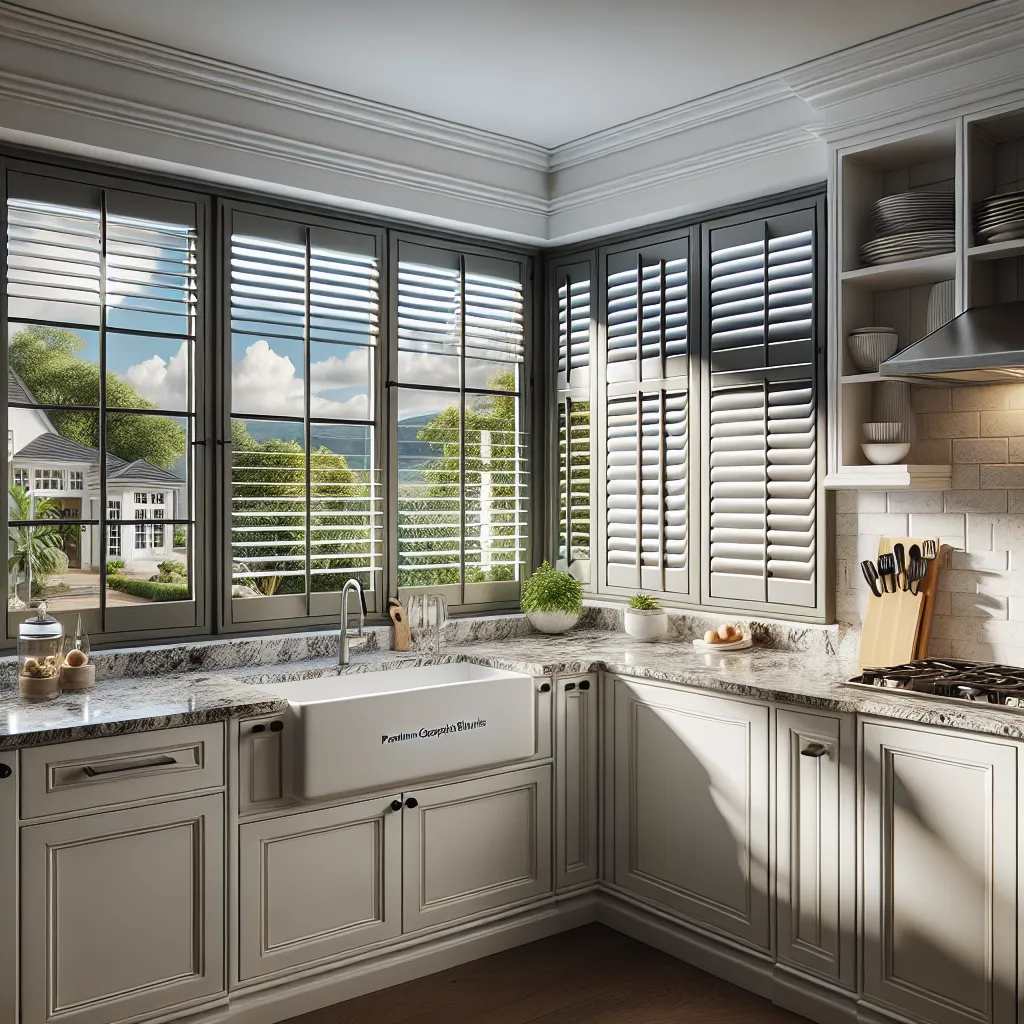
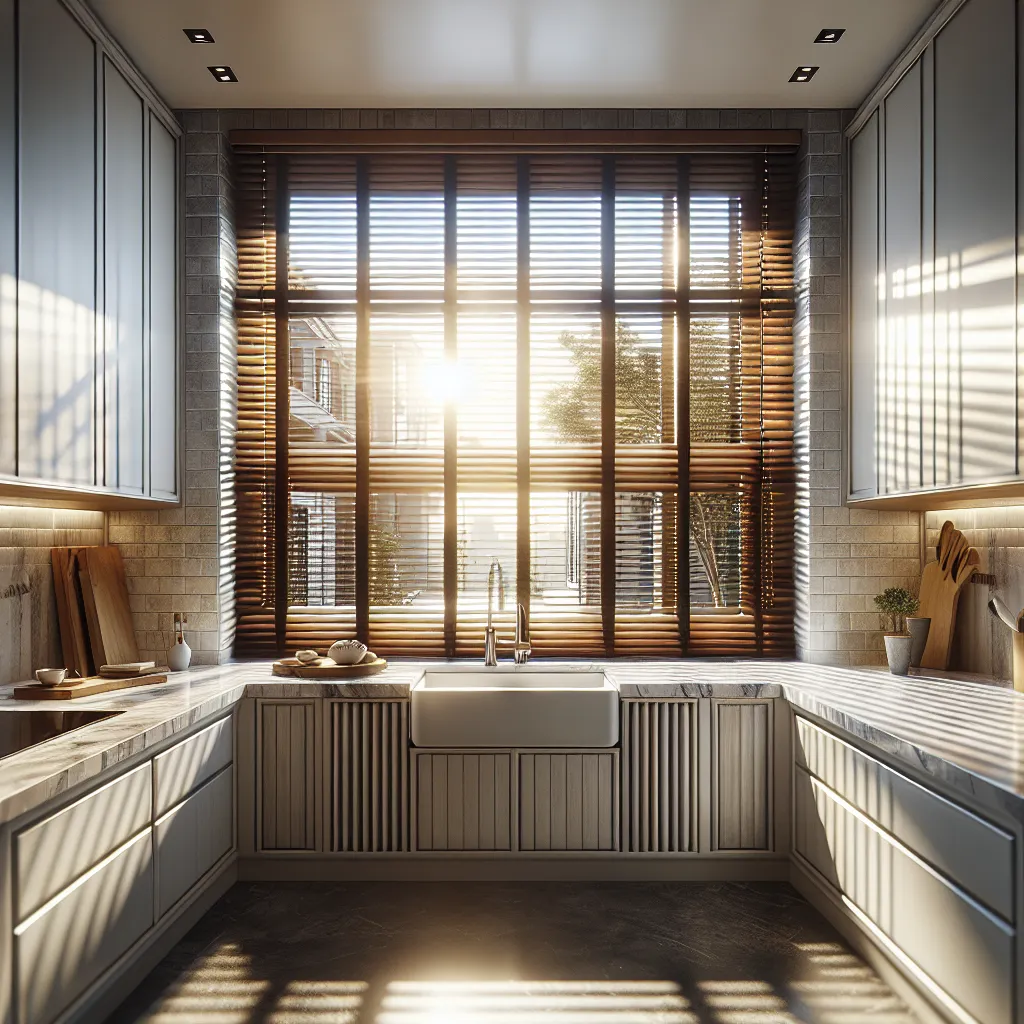
Kitchens: Faux Wood
No contest. Kitchens involve water, steam, grease, and cooking splatter. Faux wood blinds handle all of it without damage. Real wood blinds near a sink or stove would warp and stain within months.
Bathrooms: Faux Wood
Same reasoning as kitchens but even more extreme. Shower steam creates humidity levels that real wood cannot withstand. Faux wood is the only wood-look blind suitable for bathroom installation.
Living Rooms: Either (Real Wood Preferred for High-End)
Living rooms are climate-controlled, low-moisture environments where both types perform well. If your living room is a showpiece and you want the authentic warmth of natural wood grain, real wood blinds are worth the investment. If budget is a consideration, quality composite faux wood blinds will look excellent.
Bedrooms: Either
Bedrooms have the same favorable conditions as living rooms -- controlled temperature, low moisture, moderate light. Choose based on your budget and aesthetic preferences. Blackout options are available in both faux wood and real wood.
Home Offices: Either (Faux Wood Often Better)
Home offices benefit from faux wood's lower weight (easier to adjust throughout the day for glare management) and lower cost. Real wood is fine if the office is a visible space where appearances matter for video calls or client visits.
Sunrooms and Enclosed Porches: Faux Wood
These spaces experience temperature extremes and humidity fluctuations that would damage real wood. Faux wood resists both.
Children's Rooms and Playrooms: Faux Wood
Kids are rough on window treatments. Faux wood slats resist bending, do not crack as easily, and can be cleaned of sticky fingerprints without damage. Cordless operation is essential for child safety regardless of material.
Formal Dining Rooms and Studies: Real Wood
These are low-traffic, high-visibility rooms where the authentic quality of natural wood makes the strongest impression. If you are going to splurge on real wood blinds anywhere in your home, these are the rooms where the investment shows the most.
Environmental Considerations
Faux Wood: Plastic-Based
Most faux wood blinds are made from PVC or contain significant plastic content. PVC production involves chemicals of environmental concern, and PVC products are not easily recyclable. If environmental sustainability is a priority, this is a mark against faux wood.
Some manufacturers now offer "eco" faux wood blinds made from recycled materials or plant-based polymers. These are worth seeking out if you want the practical benefits of faux wood with a smaller environmental footprint.
Real Wood: Renewable but Resource-Intensive
Real wood is a renewable, biodegradable material. Basswood grows relatively quickly and is harvested from managed forests. At end of life, wood blinds decompose naturally, unlike PVC.
However, the manufacturing process (harvesting, kiln-drying, machining, finishing) uses energy and produces waste. And the finishes applied to wood blinds (stains, lacquers, sealants) may contain VOCs (volatile organic compounds), particularly during the off-gassing period after installation.
Neither option is clearly "green." If environmental impact matters, look for manufacturers that use sustainable wood sourcing (FSC certification) or recycled synthetic materials.
Making Your Decision: Faux Wood or Real Wood?
Choose Faux Wood Blinds If:
- Budget is a primary consideration
- You need blinds for kitchens, bathrooms, or high-moisture areas
- You want low-maintenance, easy-to-clean window treatments
- You have children or pets who may be rough on the blinds
- You need blinds for a rental property or a home you may sell soon
- You are covering many windows and want to keep total cost reasonable
Choose Real Wood Blinds If:
- You value authentic materials and natural aesthetics
- You are furnishing a high-end home or high-visibility room
- Your rooms are climate-controlled with moderate humidity
- You want the unique character of natural wood grain
- You are matching existing real wood trim, flooring, or furniture
- You view window treatments as a long-term investment
The Hybrid Approach
Many homeowners get the best results by using both: real wood blinds in the living room, dining room, and master bedroom where the natural material makes the strongest visual impact, and faux wood blinds in kitchens, bathrooms, children's rooms, and secondary spaces where practicality trumps aesthetics. When you coordinate the stain colors, the two types blend seamlessly throughout the home.
See the Difference for Yourself
The best way to decide between faux wood and real wood blinds is to hold both materials in your hands and compare them against your room's decor. Preview fabrics online of both types in the stain colors you are considering. View them against your wall paint, trim, and flooring in natural light and artificial light.
If you want advice tailored to your specific rooms and budget, contact our team. We help homeowners navigate this comparison every day and can recommend the right material for each room in your home.