
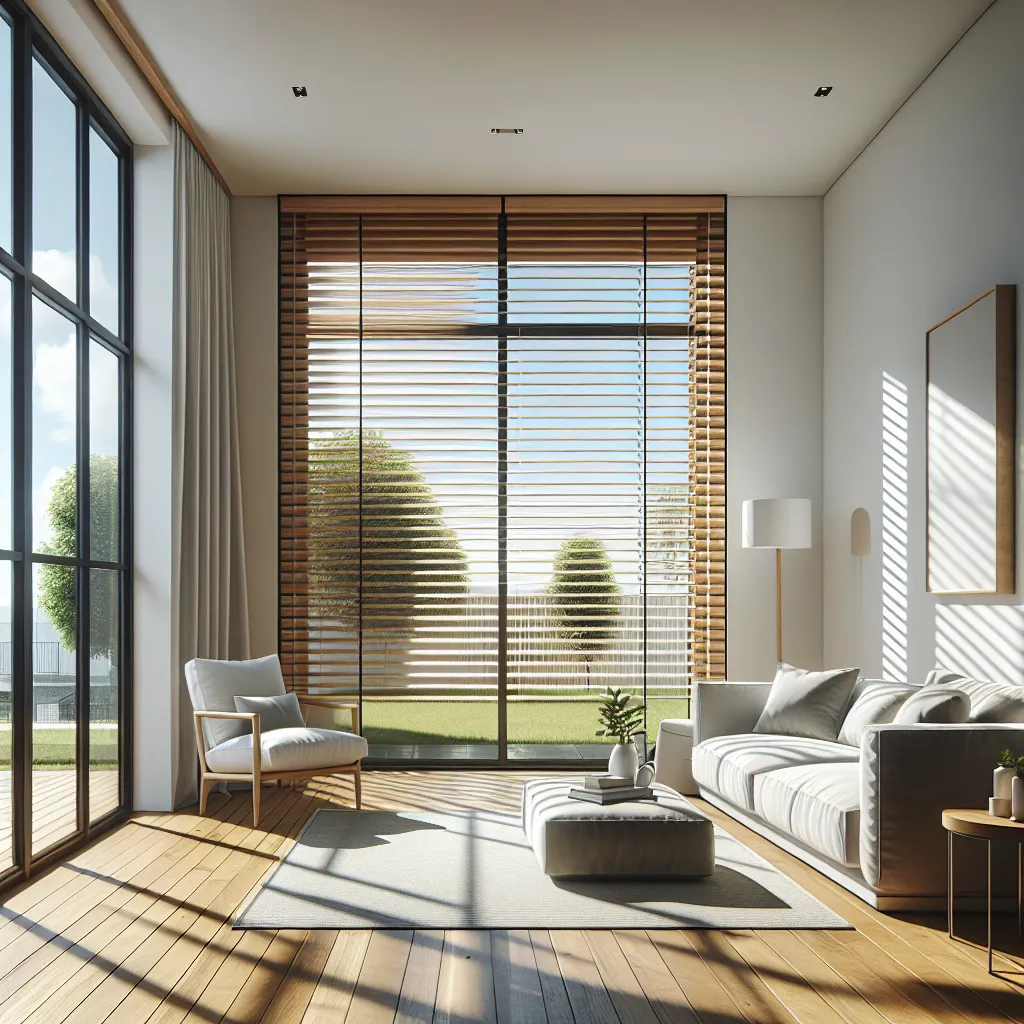
How to Measure for Blinds and Shades: Step-by-Step Guide
How to Measure for Blinds and Shades: Step-by-Step Guide
Getting the right measurements is the single most important step when ordering custom blinds or shades. Even a fraction of an inch can mean the difference between a perfect fit and a window treatment that looks awkward, lets in too much light, or simply will not install properly. The good news is that measuring for blinds is straightforward once you understand the process.
This guide walks you through everything you need to know about how to measure for blinds, whether you are ordering roller shades, cellular shades, faux wood blinds, or any other window treatment. We cover inside mount and outside mount measurements, special situations like bay windows, and the mistakes that trip up most homeowners.
Tools You Will Need
Before you start measuring, gather these essential tools:
- Steel tape measure — Fabric tape measures stretch and give inaccurate readings. Always use a rigid steel tape measure for window measurements.
- Pencil and paper — Write down every measurement immediately. Do not rely on memory, especially if you are measuring multiple windows.
- Step stool or ladder — You need to measure from the top of the window frame, so make sure you can reach comfortably.
- Level — Useful for checking whether your window frame is square and plumb.
Avoid using a ruler or yardstick. These are not precise enough for window treatment measurements where accuracy to the nearest 1/8 inch matters.
Inside Mount vs. Outside Mount: Which Should You Choose?
Before you pick up your tape measure, you need to decide on your mounting style. This decision affects how and where you measure.
Inside Mount
An inside mount means the blinds or shades sit inside the window frame opening. The brackets attach to the inside of the frame, and the window treatment is recessed within the opening.
Advantages of inside mount:
- Clean, built-in appearance that shows off window trim
- Takes up less visual space
- Does not interfere with doors or adjacent windows
- Works well in modern and minimalist decor
Requirements for inside mount:
- Minimum depth of 1 to 3 inches depending on the product type (check product specifications)
- Window frame must be reasonably square (less than 1/4 inch variance)
- Frame must be in good condition with a flat mounting surface
Outside Mount
An outside mount means the blinds or shades hang in front of the window opening. The brackets attach to the wall, ceiling, or outer face of the window frame.
Advantages of outside mount:
- Makes windows appear larger
- Covers imperfections in the window frame
- Provides better light blocking when extended beyond the frame
- Works on windows with insufficient depth for inside mount
- Can cover multiple windows with a single treatment
When to choose outside mount:
- Window frame depth is too shallow for inside mount
- Window frame is out of square by more than 1/4 inch
- You want maximum light control and privacy
- You want to create the illusion of a larger window
How to Measure for Inside Mount Blinds
Inside mount measurements are taken from inside the window frame opening. Follow these steps carefully for an accurate fit.
Step 1: Measure the Width
Measure the exact width of the inside of the window frame at three points:
- Top — Measure across the top of the opening from left inner edge to right inner edge
- Middle — Measure across the middle of the opening
- Bottom — Measure across the bottom of the opening
Record the narrowest of the three measurements. This is your ordering width. Using the narrowest measurement ensures your blinds will fit inside the opening without binding. Most manufacturers will make factory deductions (typically 1/4 to 1/2 inch) to allow clearance, so do not deduct anything yourself unless the product instructions specifically tell you to.
Step 2: Measure the Height
Measure the exact height of the inside of the window frame at three points:
- Left — Measure from the top of the opening to the window sill on the left side
- Center — Measure from the top to the sill in the center
- Right — Measure from the top to the sill on the right side
Record the longest of the three measurements. This ensures your blinds will cover the full height of the window.
Step 3: Measure the Depth
Measure the depth of the window frame from the front edge to the glass or window sash. This determines whether your chosen product will fit as an inside mount.
| Product Type | Minimum Depth Required |
|---|---|
| Mini Blinds (1 inch) | 1 inch |
| Faux Wood Blinds (2 inch) | 2 inches |
| Wood Blinds (2 inch) | 2.25 inches |
| Roller Shades | 1.5 inches |
| Cellular Shades | 0.75 to 2 inches |
| Roman Shades | 2 inches |
| Vertical Blinds | 3 inches |
If your window lacks the required depth, an outside mount is the better option. You can also consider a flush or hybrid mount where the headrail extends slightly beyond the frame.
Step 4: Check for Obstructions
Look inside the window frame for anything that could interfere with mounting or operation:
- Window cranks or handles
- Locks or latches
- Trim or molding
- Alarm sensors
- Anything that protrudes from the frame
Note the location and how far each obstruction extends into the frame. You may need to adjust your mount position or choose a different mounting style.
How to Measure for Outside Mount Blinds
Outside mount measurements are more forgiving than inside mount, but accuracy still matters for a polished look.
Step 1: Measure the Width
Decide how far you want the blinds to extend beyond the window opening on each side. A standard overlap is 1.5 to 3 inches on each side.
- Measure the full width of the window opening (outside edge to outside edge of the frame)
- Add your desired overlap on each side
Example: If your window opening is 36 inches wide and you want 2 inches of overlap on each side, your ordering width is 40 inches.
A wider overlap provides better light blocking and privacy. For bedrooms, consider adding 3 inches on each side for maximum coverage.
Step 2: Measure the Height
Decide where you want the top of the blinds and where you want the bottom to reach.
- Top position — Most outside mount blinds look best when mounted 3 to 4 inches above the window opening. This creates a taller, more elegant appearance and prevents light from leaking over the top.
- Bottom position — Decide whether you want the blinds to reach the window sill, fall below the sill, or stop at the floor for full-length treatments.
- Measure from your desired top position to your desired bottom position.
Step 3: Check the Mounting Surface
Make sure the wall or trim where you plan to mount the brackets is flat, solid, and free of obstructions. If mounting to drywall, you will need appropriate anchors. Mounting directly into a wall stud or solid wood trim is always more secure.
Measuring for Specific Blind Types
Different window treatment styles have some unique measurement considerations.
Roller Shades
For roller shades, pay special attention to the fabric width versus the total width. The roller tube extends beyond the fabric on each side, so the total width of the shade is typically 1 to 1.5 inches wider than the fabric panel. When ordering for an inside mount, measure the opening and let the manufacturer calculate the deductions.
Cellular (Honeycomb) Shades
Cellular shades compress into a compact stack at the top when fully raised. If you have a shallow window frame, check that the stacking height will not block too much of the glass. Top-down bottom-up cellular shades require additional depth for the operating mechanisms.
Vertical Blinds
Vertical blinds for sliding doors or wide windows require precise width measurements. For a sliding door, measure the full width of the opening and add 3 to 4 inches on each side so the vanes can stack clear of the walkway. Measure height from the mounting position to 1/2 inch above the floor.
Faux Wood and Wood Blinds
Horizontal blinds with 2-inch or 2.5-inch slats produce a significant stack when raised. If you frequently raise your blinds fully, measure how much stacking will occur and whether it will block your view. Wider slats mean fewer slats and a smaller stack.
How to Measure Bay Windows
Bay windows present a unique challenge because the glass panels are set at angles to each other. Here is how to handle them:
- Measure each window section individually. Treat each pane as a separate window and take independent width and height measurements for each section.
- Measure the angles. Use an angle finder or protractor to measure the angle where the window sections meet. Common bay window angles are 90, 120, and 135 degrees.
- Consider inside mount for each section. Inside mounting each section separately is usually the cleanest approach for bay windows. It eliminates the need to deal with the angles between sections.
- Check depth carefully. Bay window frames are sometimes shallower than standard windows, so verify that each section has adequate depth for an inside mount.
If your bay window sections are very narrow, outside mount with a continuous valance or cornice can create a unified look.
How to Measure Arched and Specialty Windows
Arched, circular, and other specialty-shaped windows require template measurements rather than simple width and height dimensions.
For arched windows, measure:
- The full width at the widest point
- The height from the sill to the top of the arch
- The height from the sill to the bottom of the arch (the spring line where the curve begins)
Many homeowners pair a custom arch treatment on the top with a standard rectangular blind below the spring line. This approach is typically more affordable than a single custom-shaped treatment.
Common Measuring Mistakes to Avoid
These are the errors we see most frequently from homeowners measuring their own windows:
Mistake 1: Rounding Measurements
Never round your measurements to the nearest inch or half inch. Measure to the nearest 1/8 inch. A window that measures 35-5/8 inches should be recorded as 35-5/8 inches, not 35.5 or 36 inches.
Mistake 2: Measuring Only Once
Always measure each dimension at least three times in different positions. Windows are rarely perfectly square, and you need to know the full range of variation.
Mistake 3: Using a Fabric Tape Measure
Fabric tape measures stretch over time and give unreliable readings. Use a rigid steel tape measure for accuracy.
Mistake 4: Deducting Clearance for Inside Mount
Do not subtract clearance from your inside mount measurements. Provide the exact opening size and let the manufacturer make the appropriate deductions. Different products require different clearances, and the manufacturer knows the correct amounts.
Mistake 5: Assuming All Windows Are the Same Size
Even windows that look identical can vary by 1/4 inch or more. Measure every window individually, even in the same room. Label each measurement with the window location so you do not mix them up.
Mistake 6: Forgetting to Check Frame Depth
Many homeowners measure width and height but forget to check whether the frame is deep enough for an inside mount. This is especially common in older homes and apartments with metal window frames.
Mistake 7: Measuring from the Wrong Reference Point
For inside mount, measure the window frame opening, not the glass. For outside mount, measure from your desired mounting points, not the opening. Mixing these up can result in blinds that are several inches too small or too large.
Measurement Checklist
Use this checklist to make sure you have everything you need before placing your order:
- Decided on inside mount or outside mount
- Measured width at three points (top, middle, bottom)
- Measured height at three points (left, center, right)
- Verified frame depth for inside mount
- Checked for obstructions (handles, cranks, locks)
- Measured to the nearest 1/8 inch
- Labeled each measurement with window location
- Double-checked all measurements
Tips for Getting the Best Results
Measure at the same time of day. Wood window frames can expand and contract slightly with temperature and humidity changes. Measure all windows in the same conditions for consistency.
Have someone help you. A second person can hold one end of the tape measure while you read the other end, reducing the chance of errors on wider windows.
Take photos of each window. Photograph each window with your measurements written on the notepad visible in the frame. This gives you a visual reference when placing your order.
Order online fabric previews first. Before committing to a full order, request samples of the materials and colors you are considering. Colors look different in various lighting conditions, and a sample lets you see how the material looks in your actual room.
Ready to Order Your Perfect-Fit Blinds?
Now that you have your measurements, you are ready to find the ideal window treatments for your home. Browse our complete selection of blinds and shades to find styles that match your decor and budget. We carry everything from classic faux wood blinds to modern roller shades and energy-efficient cellular shades.
Need help choosing the right product or have questions about your measurements? Our window treatment experts are here to help. Contact us for personalized advice and we will make sure you get a perfect fit every time.