
Sunroom Blinds & Shades
Block UV rays and control glare without losing the view. Keep your sunroom cool, comfortable, and protected all year round.
Shop Sunroom Blinds & Shades
Made to your exact window size. Prices shown for a 36" × 60" window — your size is priced live in the next step.
Quick answers
How much UV do sunroom blinds block?
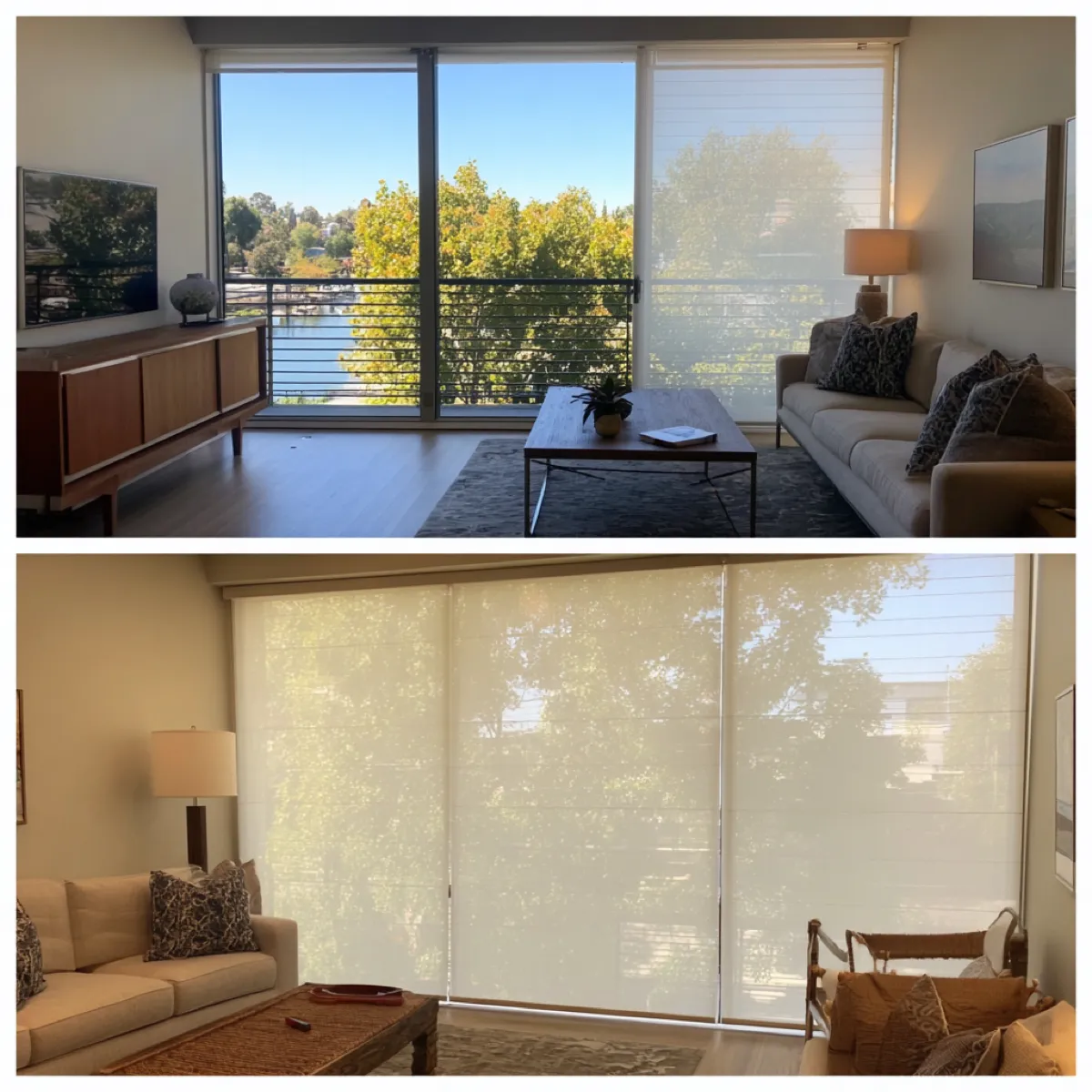
Solar shades can block up to 99% of harmful UV rays while still preserving your view. The level of UV protection depends on the openness factor — lower openness (1-3%) blocks more UV, while higher openness (5-10%) lets you see through more clearly but still blocks 90%+ of UV rays.
Can sunroom blinds help control heat?
Yes, the right blinds can reduce sunroom temperatures by 10-15 degrees. Solar shades reflect solar heat before it enters, while cellular shades trap air in honeycomb pockets to insulate. Both significantly reduce cooling costs and make sunrooms usable even in peak summer.
What material holds up best in sun exposure?
Solar shade fabrics are specifically engineered for constant sun exposure and won't fade, crack, or deteriorate. They're made from UV-stabilized polyester or PVC-coated fiberglass that maintains color and structure for years. Avoid natural fabrics like cotton or silk, which degrade quickly in direct sunlight.
The Power of UV Protection
Best Blinds for Sunrooms
Our top picks for UV protection, glare control, and keeping your sunroom comfortable.
Solar Shades
Purpose-built for sun-drenched rooms. Block UV and glare while preserving your outdoor view through the see-through weave.
- Up to 99% UV blocking
- See-through view
- Multiple openness factors
- Fade-resistant fabric
Cellular Shades
Honeycomb air pockets provide superior insulation to keep sunrooms cool in summer and warm in winter.
- R-5 insulation value
- Reduces cooling costs
- Light filtering options
- Top-down bottom-up available
Light Filtering Roller Shades
Affordable sun control with a clean, modern look. UV-blocking fabrics at an accessible price point.
- UV protection
- 100+ colors available
- Motorized options
- Easy to maintain
Solutions for Every Sunroom Style
Three-Season Sunroom
Solar shades with 5% openness
Perfect balance of view and protection. Blocks UV and glare while letting you enjoy the scenery through the fabric weave.
Four-Season Sunroom
Dual cellular shades
Two-in-one sheer and room darkening. Superior insulation keeps the room comfortable in every season, reducing HVAC costs.
Conservatory
Motorized solar shades
Control large spans of glass effortlessly. Sun sensors can auto-adjust throughout the day as the sun moves across the sky.
Screened Porch
Outdoor roller shades
Weather-resistant fabrics handle humidity and temperature swings. Easy to raise for fresh air or lower for sun protection.
Garden Room
Light filtering cellular shades
Protect plants from scorching while allowing diffused light to pass through. Excellent temperature control for sensitive plants.
Reading Nook / Sitting Area
Top-down solar shades
Lower from the top to eliminate glare at eye level while keeping the upper view open. Ideal for reading without harsh light.
Complete Buying Guide: Sunroom Window Treatments and Solar Shades
Sunroom window treatments face the most extreme light and heat conditions of any room in your home. A sunroom with floor-to-ceiling glass can reach temperatures 30 degrees or more above the rest of the house during summer, while UV rays streaming through unprotected glass can fade furniture in as little as six months. Choosing the right blinds transforms an unusable hot box into a year-round living space.
Solar shades are the number one product category for sunrooms because they are specifically engineered for high-UV, high-heat environments. Unlike conventional blinds that either block the view or let in too much heat, solar shades use a specialized woven fabric that reflects solar energy while maintaining visibility through the material. The key specification is the openness factor — the percentage of the fabric that is open space.
Understanding openness factors is essential for sunroom shopping. A 1-3% openness factor provides maximum heat and UV reduction (blocking up to 99% of UV rays) with limited see-through — you can see shapes and movement but not fine details outside. A 5% openness factor is the most popular choice because it offers excellent heat and UV control while still giving you a clear view of the outdoors. A 10% openness factor maximizes your view and feels almost like looking through a screen, but provides less heat reduction.
For sunrooms with extensive glass, cellular shades deserve consideration alongside solar shades. While they do not preserve the view like solar shades, they offer significantly better insulation — critical for four-season sunrooms that are heated in winter. Dual shades that combine a light-filtering panel with a room-darkening panel give you the ultimate flexibility: diffused light during the day and full privacy at night.
Motorization is practically a necessity for sunrooms with multiple windows. A typical sunroom has 6-12 windows or more, and manually adjusting each one as the sun moves is impractical. Motorized shades with sun sensors automatically adjust throughout the day, keeping the temperature comfortable without any effort. Most systems integrate with Alexa, Google Home, or Apple HomeKit, and can be scheduled to lower before the afternoon heat spike and raise after sunset. Browse our online fabric previews to see solar shade fabrics up close before ordering.
How to Choose Blinds for Your Sunroom
1. Assess Sun Exposure
Track which walls get direct sunlight and when. South- and west-facing glass gets the most intense exposure and needs lower openness factors (1-5%). North- and east-facing glass may only need 5-10% openness or light-filtering cellular shades.
2. Three-Season vs. Four-Season
Three-season sunrooms primarily need heat and UV protection from spring through fall. Solar shades alone usually suffice. Four-season sunrooms also need insulation for winter, making cellular shades or a combination of both types the better investment.
3. View vs. Protection Trade-off
Decide how much you prioritize the outdoor view versus maximum heat and UV reduction. Higher openness preserves the view but allows more heat. You can also mix openness factors — lower on direct-sun walls and higher on shaded sides.
4. Budget for Motorization
With many windows to cover, sunroom projects can be significant investments. Motorization adds roughly 30-40% to the cost per shade but delivers enormous convenience. If budget is tight, motorize the hardest-to-reach windows and use cordless manual operation for the rest.
Expert Tips for Sunroom Window Treatments
Add Sun Sensors for Automatic Adjustment
Sun sensors measure the amount of light hitting your sunroom and automatically lower or raise your motorized shades throughout the day. This keeps the temperature consistently comfortable without you touching a remote or app.
Combine Solar and Cellular Shades
For the best of both worlds, install solar shades on the exterior-facing glass for view and UV protection, and add cellular shades on the interior walls connecting to the house for insulation. This dual approach maximizes comfort year-round.
Choose Fade-Resistant Dark Colors
While light colors reflect more heat, dark solar shade colors provide better glare reduction and outward visibility. Modern UV-stabilized fabrics maintain their color for 10+ years even in direct sunlight, so choose the color you prefer without worrying about fading.
Consider Battery-Powered Motors
If running electrical wiring to every sunroom window is impractical, battery-powered motors offer motorization without rewiring. Modern lithium batteries last 6-12 months between charges depending on usage frequency.
Measure for Continuous Shading
When ordering multiple shades for adjacent windows, measure carefully so there are no gaps between them when lowered. Small gaps between shades let in streaks of direct sunlight that create hot spots and uneven fading on furniture.
Helpful Resources
Measuring Guide
Measure multi-window sunrooms
Installation Guide
Including motorized setup tips
Design Online
Compare openness factors firsthand
Explore More Room-Specific Guides
What Matters Most in a Sunroom
UV Protection
Block up to 99% of harmful UV rays to protect furniture, flooring, and skin from sun damage.
Glare Reduction
Eliminate harsh glare on screens and surfaces while keeping your sunroom bright and inviting.
Heat Control
Reduce sunroom temperatures by up to 15 degrees, making the space comfortable all summer long.
View Preservation
Solar shades let you enjoy the outdoor view while blocking heat and UV — the best of both worlds.
Sunroom-Friendly Features
Frequently Asked Questions
Everything you need to know about sunroom blinds
How much UV do sunroom blinds block?
Solar shades can block up to 99% of harmful UV rays while still preserving your view. The level of UV protection depends on the openness factor — lower openness (1-3%) blocks more UV, while higher openness (5-10%) lets you see through more clearly but still blocks 90%+ of UV rays.
Can sunroom blinds help control heat?
Yes, the right blinds can reduce sunroom temperatures by 10-15 degrees. Solar shades reflect solar heat before it enters, while cellular shades trap air in honeycomb pockets to insulate. Both significantly reduce cooling costs and make sunrooms usable even in peak summer.
What material holds up best in sun exposure?
Solar shade fabrics are specifically engineered for constant sun exposure and won't fade, crack, or deteriorate. They're made from UV-stabilized polyester or PVC-coated fiberglass that maintains color and structure for years. Avoid natural fabrics like cotton or silk, which degrade quickly in direct sunlight.
Are motorized blinds worth it for sunrooms?
Motorized blinds are highly recommended for sunrooms, especially those with many windows or hard-to-reach placements. You can control all shades simultaneously with a remote, app, or voice assistant. Some motorized systems include sun sensors that automatically adjust throughout the day.
Will blinds prevent my sunroom furniture from fading?
Solar shades and UV-blocking blinds can prevent up to 99% of UV-related fading on furniture, flooring, and artwork. Even with a higher openness factor that preserves your view, solar shades dramatically extend the life and color of your furnishings compared to unprotected glass.
What openness factor should I choose for my sunroom?
It depends on your priorities. A 1-3% openness factor offers maximum UV and glare protection with limited see-through. A 5% openness is the most popular — it balances view, glare control, and UV protection well. A 10% openness maximizes your view but provides less glare and heat reduction.
How much can sunroom blinds reduce my cooling costs?
Solar shades can reduce sunroom cooling costs by 25-40% by reflecting heat before it enters through the glass. Cellular shades provide additional savings through insulation — their honeycomb construction traps air to reduce heat transfer. Combining both types on a four-season sunroom can cut HVAC costs for that space by more than half.
Can I install blinds on angled or skylighted sunroom glass?
Yes. Skylight shades are available with special track systems that hold the shade against angled glass. Motorized operation is recommended for overhead installations since manual adjustment is impractical. Most solar shade fabrics work in skylight applications, though you should choose lower openness for overhead glass that gets intense direct sun.
What is the difference between interior and exterior sunroom shades?
Interior shades mount inside the sunroom and are protected from weather. Exterior shades mount outside the glass and block heat before it enters, providing 20-30% better heat reduction. However, exterior shades must withstand wind and weather, limiting your options to specifically rated outdoor products.
How do I clean solar shades in my sunroom?
Solar shade fabrics are designed for easy maintenance. Vacuum with a brush attachment for regular dusting. For deeper cleaning, wipe with a damp cloth and mild soap. Most solar fabrics are mold and mildew resistant. Avoid harsh chemicals or abrasive cleaners that could damage the UV-stabilized coating.
Enjoy Your Sunroom Year-Round
UV protection, glare control, and heat reduction — without losing the view. Free shipping on all orders.